

LASIK has helped many people reduce their dependence on glasses and contact lenses, but it is not suitable for every eye. Corneal thickness, refractive power, eye anatomy, and other clinical factors can influence whether laser vision correction is appropriate. People who cannot undergo LASIK or need another form of refractive correction may consider implantable contact lenses.
Also known as Implantable Collamer Lenses, or ICLs, these lenses correct refractive errors without removing corneal tissue. They are placed inside the eye while the natural lens remains intact.
At Surya Eye Hospital, we assess the prescription, cornea, eye anatomy, and overall ocular health before recommending a refractive procedure. This helps determine whether LASIK, ICL, or another vision correction option is more appropriate for the individual eye.
What Are Implantable Contact Lenses?
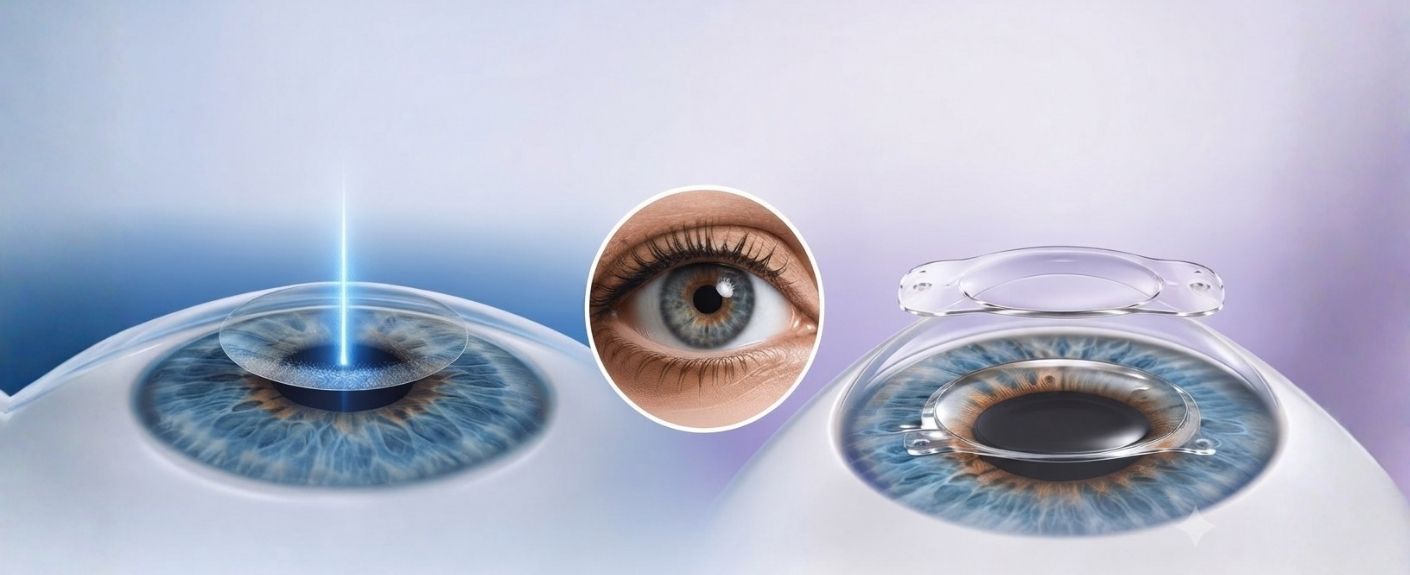
Implantable Contact Lenses are specially designed lenses placed inside the eye to correct refractive errors such as myopia. Unlike regular contact lenses, they do not sit on the surface of the eye or require daily removal.
An ICL is positioned behind the coloured part of the eye, called the iris, and in front of the natural crystalline lens. The natural lens is not removed during the procedure.
ICL therefore corrects the way light focuses on the retina without reshaping the cornea. This is one of its major differences from LASIK, where a laser changes the shape of the corneal tissue. The lens is intended to remain in the eye long term. However, an ophthalmic surgeon can remove or replace it if clinically necessary.
When Can ICL Be an Alternative to LASIK?
ICL may be considered when LASIK is unsuitable or when an implantable lens is better suited to the patient's prescription and eye measurements. Having a high spectacle power alone does not automatically make someone eligible for ICL.
An ophthalmologist may consider ICL in situations such as:
- Higher degrees of myopia: ICL can correct substantial refractive errors in appropriately selected eyes.
- Thin corneas: Some patients do not have sufficient corneal thickness for safe laser reshaping.
- Unsuitable corneal characteristics: Corneal shape and other measurements may make laser procedures inappropriate.
- Stable refractive error: The spectacle prescription should generally be stable before refractive surgery.
- Suitable eye anatomy: Adequate space inside the eye is required for safe positioning of the lens.
- Healthy corneal endothelium: The endothelial cells lining the inner cornea need assessment before surgery.
A detailed eye examination is therefore necessary before deciding between LASIK and ICL.
What Are the Pros of Implantable Contact Lenses?
ICL offers several potential advantages because it corrects refractive error without reshaping the cornea. It may also provide an option for selected patients who are not suitable candidates for LASIK.
- No corneal tissue removal: ICL corrects vision from inside the eye, so corneal tissue does not need to be removed with a laser.
- Suitable for higher refractive errors: It may be considered for moderate to high myopia when laser correction is not appropriate for the individual eye.
- An option for some thin corneas: Because ICL does not rely on corneal reshaping, it may suit selected patients whose corneal thickness limits LASIK.
- Natural lens remains intact: The eye's natural crystalline lens is not removed during ICL implantation.
- Lens can be removed or exchanged: An ophthalmic surgeon can remove or replace the lens if clinically necessary, although another intraocular procedure is required.
- Good visual quality in suitable patients: ICL can provide effective refractive correction and good visual quality in appropriately selected patients.
What Are the Cons and Risks of ICL?
ICL has important advantages, but it is still surgery performed inside the eye. This means its risks differ from those associated with LASIK and should be discussed carefully before treatment.
- It is an intraocular procedure: ICL requires surgery inside the eye, unlike LASIK, which is performed on the cornea.
- Not everyone is suitable: Eligibility depends on eye anatomy, refractive stability, endothelial cell health, and other clinical measurements.
- Eye pressure can change: Some patients may develop increased intraocular pressure and require monitoring after surgery.
- Cataract formation is possible: Cataract development is a recognised potential complication, although the risk varies between patients.
- Endothelial cells require monitoring: Long-term follow-up may be advised to assess the health of the corneal endothelium.
- Glare or halos may occur: Some patients may notice visual symptoms such as halos, glare, or light sensitivity after surgery.
- Additional surgery may be needed: Lens repositioning, exchange, or removal may occasionally be required.
ICL vs LASIK: What is the Difference?
ICL and LASIK both aim to reduce refractive error, but they achieve this in very different ways. LASIK reshapes the cornea with a laser, whereas ICL places an additional corrective lens inside the eye.
| Factor | ICL | LASIK |
| How correction works | Lens implanted inside the eye | Cornea reshaped using a laser |
| Corneal tissue removed | No | Yes |
| Natural lens retained | Yes | Yes |
| Thin corneas | May suit selected patients | May limit eligibility |
| Higher prescriptions | Can be considered in suitable patients | Suitability depends on prescription and corneal measurements |
| Intraocular surgery | Yes | No |
| Can treatment be removed? | Lens can be surgically removed or exchanged | Corneal tissue removal cannot be reversed |
| Important risks | Pressure changes, cataract, endothelial changes, infection, visual symptoms | Dry eye, glare or halos, ectasia, under/overcorrection and flap-related complications where applicable |
Research comparing ICL and LASIK has shown good visual outcomes with both procedures in selected patients. Some comparative studies have reported benefits in optical quality with ICL, particularly for higher myopia, but these findings do not make ICL universally preferable.
What Happens Before ICL Surgery?
Before ICL surgery, detailed eye measurements are performed to confirm that the eye can safely accommodate the lens. For patients considering ICL surgery in Mumbai, preoperative assessment at Surya Eye Hospital helps to determine lens suitability, power, and positioning before treatment is planned.
Evaluation may include:
- Refraction and confirmation of prescription stability
- Corneal thickness and shape assessment
- Measurement of the space inside the front of the eye
- Evaluation of the anterior chamber angle
- Endothelial cell assessment
- Pupil measurements
- Eye pressure measurement
- Examination of the natural lens
- Retinal evaluation where clinically indicated
At Surya Eye Hospital, we assess the complete refractive profile rather than deciding on a procedure from spectacle power alone. If LASIK is unsuitable, the ophthalmologist can evaluate whether ICL or another refractive option fits the patient's eye measurements and visual needs.
What to Expect During and After ICL Surgery
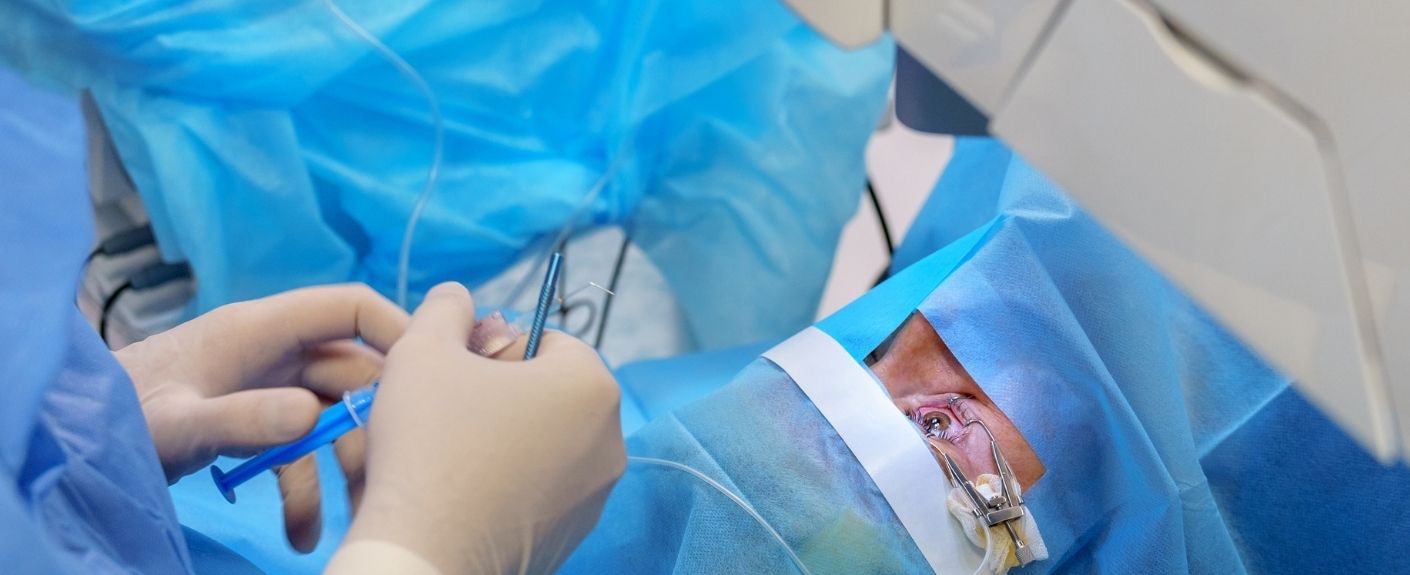
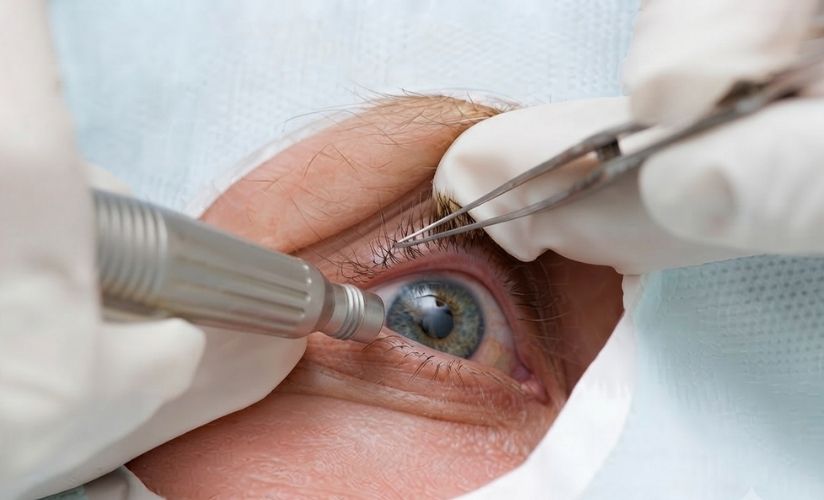
During ICL surgery, the lens is inserted through a small incision and positioned behind the iris. Follow-up examinations then check vision, lens position, eye pressure, and recovery.
The process generally involves:
- Preparing the eye: Anaesthetic eye drops are used, and the eye is prepared under sterile conditions.
- Creating a small incision: The surgeon makes a small opening through which the folded lens can enter the eye.
- Positioning the lens: The ICL is carefully placed behind the iris and in front of the natural lens.
- Early monitoring: Eye pressure, vision, and lens position are assessed after surgery.
- Postoperative medication: Prescribed eye drops may be required to control inflammation and reduce infection risk.
- Scheduled follow-up: Subsequent examinations help monitor healing and the long-term position of the lens.
Patients should avoid rubbing the eye and follow activity restrictions provided by their ophthalmologist.
When Should You Contact Your Ophthalmologist After ICL Surgery?
Mild discomfort or temporary visual changes can occur during early recovery, but certain symptoms need prompt assessment. Contact your ophthalmologist if you develop:
- Severe or increasing eye pain
- Sudden reduction or loss of vision
- Increasing redness or swelling
- Persistent sensitivity to light
- New flashes, floaters, or a curtain-like shadow in vision
- Increasing discharge from the eye
- Persistent headache, nausea, or vomiting with eye discomfort
These symptoms do not always indicate a serious complication, but they should be evaluated promptly after intraocular surgery.
- 20 Contact Lens Questions Answered by Eye Doctors
- Wearing Contact Lenses? You Can Still Get LASIK - Dr. Jay Goyal Explains
- Can You Get LASIK If You Wear Lenses
How Do We Decide Whether ICL or LASIK is Right for You?
Choosing between ICL and LASIK requires detailed eye measurements rather than simply comparing the advantages of each procedure. Prescription, corneal structure, age, eye anatomy, ocular health, and individual visual requirements all matter.
At Surya Eye Hospital, refractive evaluation may include assessment of:
- Spectacle power and refractive stability
- Corneal thickness and topography
- Anterior segment anatomy
- Overall eye health
- Suitability for laser correction
- Suitability for implantable lens correction
- Individual visual expectations and lifestyle requirements
LASIK may be appropriate when the prescription and corneal parameters allow safe laser correction. ICL may offer another option when corneal laser surgery is unsuitable or when the refractive and anatomical findings favour lens implantation.
The purpose of the evaluation is therefore not to label one procedure as better, but to identify the treatment that is appropriate for the individual eye.
Conclusion
Implantable Contact Lenses can provide a suitable alternative to LASIK for selected patients, especially when refractive power or corneal characteristics limit laser vision correction. For people exploring a LASIK alternative in Mumbai, ICL offers vision correction without removing corneal tissue, although it remains an intraocular procedure with recognised risks such as pressure changes and cataract formation.
Choosing between LASIK and ICL requires a detailed ophthalmic evaluation. At Surya Eye Hospital, patients considering ICL surgery in Mumbai are assessed for refractive power, corneal health, internal eye measurements, and overall ocular suitability before treatment is recommended.
Frequently Asked Questions
Is ICL safer than LASIK?
Neither procedure is universally safer for everyone. LASIK and ICL involve different surgical approaches and different potential risks. The safer option for an individual patient depends on refractive power, corneal measurements, eye anatomy, age, and ocular health.
Can ICL be removed later?
Yes, an ICL can be surgically removed or exchanged if clinically required. However, removal requires another intraocular procedure, so ICL should not be described as casually reversible. The need for removal or replacement is assessed individually by an ophthalmologist.
Who is not suitable for ICL surgery?
ICL may be unsuitable for people with inadequate space inside the eye, insufficient endothelial cell density, certain forms of glaucoma, unstable refractive power, or other eye conditions. Suitability can only be confirmed after detailed ophthalmic examination and measurements.
Can ICL correct high eye power?
ICL can correct substantial levels of myopia in appropriately selected patients and is frequently considered when higher prescriptions make some laser procedures less suitable. The treatable range depends on lens availability, eye anatomy, refractive measurements, and regulatory indications.
Does ICL cause cataracts?
Cataract formation is a recognised possible complication of ICL implantation, but it does not occur in every patient. Risk can vary with age, lens design, positioning, refractive error, and eye anatomy, making postoperative monitoring important.
How long does recovery take after ICL surgery?
Many patients notice visual improvement relatively early after ICL surgery, but recovery differs between individuals. Vision may fluctuate during healing, and normal activities should be resumed according to the ophthalmologist's advice after postoperative examination.
Understand your suitability and the right treatment approach before you decide.