


Vision problems are common and many people rely on glasses or contact lenses for years. Over time the idea of a permanent solution becomes appealing. LASIK surgery has become one of the most popular ways to correct refractive errors including myopia or nearsightedness. It is quick and usually safe when performed on the right candidate.
However, not everyone with high myopia is an ideal fit for LASIK. People often ask how much power is too high for the procedure and whether there are limits that make it risky. This article explains LASIK for high myopia. It covers what doctors consider safe limits, what factors matter besides power and what alternatives exist when LASIK is not suitable.
Myopia and Its Severity
Myopia occurs when light focuses in front of the retina instead of directly on it. This makes distant objects appear blurry while near objects stay clear.
Doctors measure myopia in diopters. The higher the number the stronger the prescription. Types of Myopia Based on Power:
- Mild myopia: up to -3.00 D
- Moderate myopia: -3.00 D to -6.00 D
- High myopia: more than -6.00 D
High myopia is not just about needing thicker glasses. It can also increase the risk of eye conditions like retinal detachment and glaucoma.
What Is LASIK Surgery?
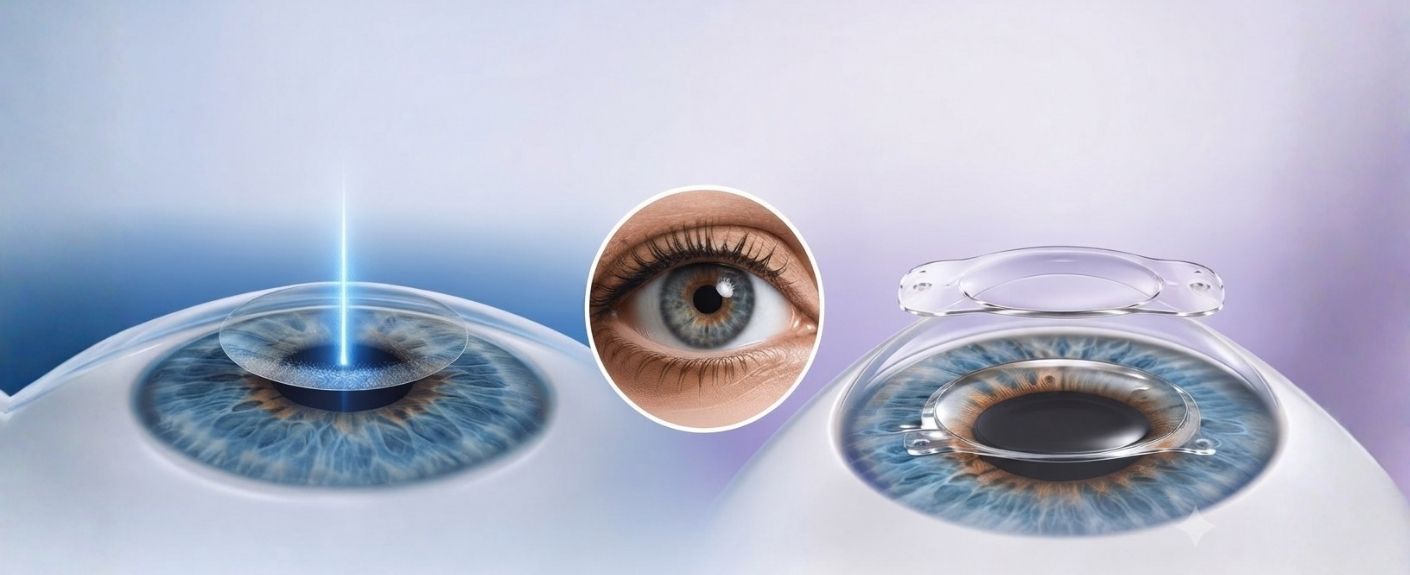
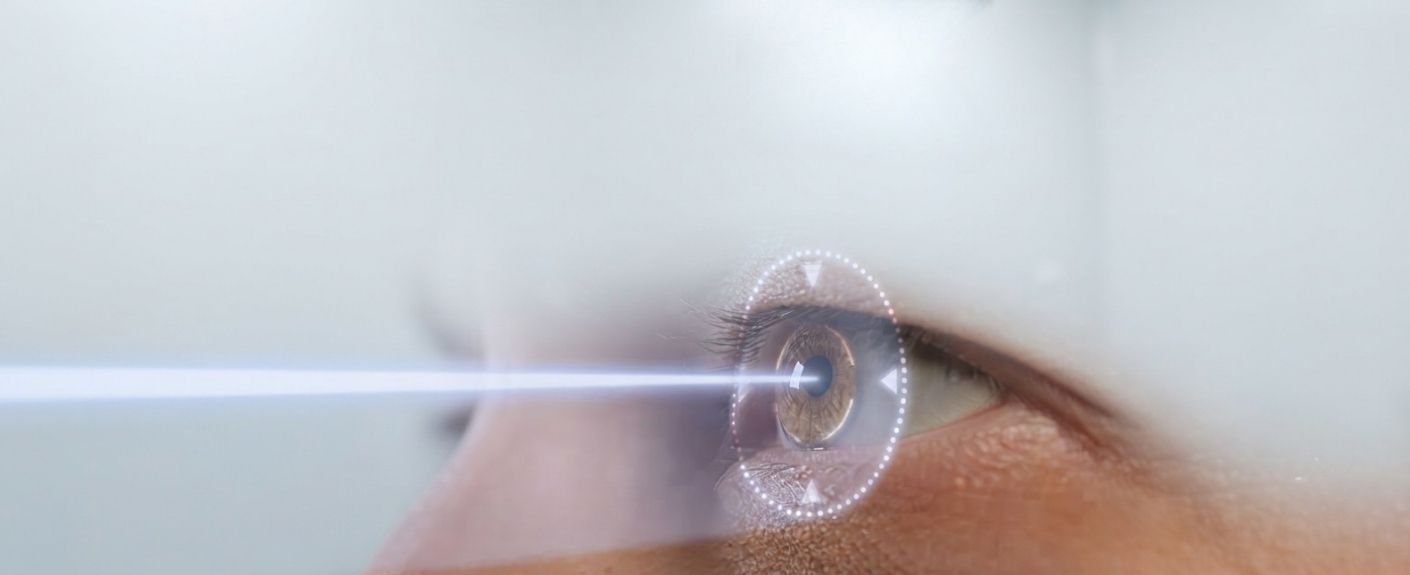
LASIK stands for Laser Assisted In Situ Keratomileusis. It reshapes the cornea to improve how light enters the eye.
How LASIK Works:
- A thin flap is created on the cornea
- A laser removes a small amount of corneal tissue
- The flap is repositioned
The procedure takes only a few minutes for each eye and most patients notice improved vision within a day or two.
Can LASIK Treat High Myopia?
Yes, LASIK can treat high myopia but only up to a certain limit and with caution.
Doctors usually treat myopia up to around -8.00 D to -10.00 D with LASIK. Some advanced systems may go slightly higher but safety becomes a concern beyond this range.
The reason lies in how LASIK works. The laser removes corneal tissue to correct vision. Higher power requires removing more tissue. If too much tissue is removed the cornea can become weak and unstable.
What Power Is Considered Too High for LASIK?
In general anything beyond -10.00 D is often considered too high for LASIK though this is not a strict rule.
Doctors evaluate each case individually. Some people with lower power may still not qualify while others with slightly higher power might be eligible depending on other factors.
Why Can High Power Be Risky?
- Excess tissue removal can weaken the cornea
- Increased risk of corneal ectasia which is a bulging of the cornea
- Reduced quality of vision especially at night
- Higher chance of regression where vision changes again
Read More:
Types of LASIK Surgery – Choosing the Best Option for You
Can You Get LASIK If You Wear Lenses?
Can LASIK Cure Cylindrical Power? What Indian Ophthalmologists Say
Is Corneal Thickness More Important Than Power?
Yes, corneal thickness often matters more than the power itself. A person with -8.00 D but thin corneas may not qualify for LASIK. Meanwhile someone with -9.00 D and thick corneas might still be a good candidate.
Doctors aim to leave at least 250 to 300 microns of untouched corneal tissue after surgery. This helps maintain the strength of the eye.
Other Factors That Decide LASIK Eligibility
Power alone does not decide suitability. Doctors check several other parameters before recommending LASIK.
1. Age: Most surgeons prefer patients above 18 years with stable vision for at least one year.
2. Eye Health: Conditions like dry eyes keratoconus or infections can make LASIK unsafe.
3. Stable Prescription: Frequent changes in power indicate that the eyes are still changing.
4. Pupil Size: Larger pupils can increase the risk of glare and halos after surgery.
What Happens If LASIK Is Done at Very High Power?
Performing LASIK beyond safe limits can lead to complications. Possible Risks:
- Blurred or distorted vision
- Sensitivity to light
- Halos around lights at night
- Corneal ectasia
- Need for additional procedures
This is why experienced surgeons follow strict guidelines.
Are There Better Alternatives for High Myopia?
Yes, several alternatives can safely treat high myopia when LASIK is not suitable.
Implantable Collamer Lens (ICL)
ICL is often considered one of the most effective options for people with very high myopia especially when LASIK is not safe.
In this procedure the surgeon places a soft biocompatible lens inside the eye. It sits behind the iris and in front of the natural lens. Unlike LASIK this method does not reshape or remove any corneal tissue. Because of this it is a safer choice for people with thin corneas or very high power.
How ICL Works
The lens used in ICL is made from a special material called collamer which is designed to work well with the natural structures of the eye. The procedure usually takes about 20 to 30 minutes and is done under local anesthesia.
Key Benefits of ICL
- Suitable for very high power even up to -20.00 D or more
- Does not thin or weaken the cornea
- Offers high definition and sharp vision quality
- Reduces chances of dry eyes compared to LASIK
- The lens can be removed or replaced if needed
ICL is often recommended for people who:
- Have very high myopia
- Have thin or irregular corneas
- Are not suitable for LASIK or SMILE
- Have stable vision
PRK (Photorefractive Keratectomy)
PRK is one of the oldest laser vision correction procedures and is still widely used today. It is especially helpful for people who cannot undergo LASIK due to thin corneas.
Unlike LASIK, PRK does not involve creating a flap. Instead the surgeon gently removes the outer layer of the cornea and then reshapes the underlying tissue using a laser.
How PRK Works
After removing the outer corneal layer the laser corrects the refractive error. The surface layer then grows back naturally over a few days.
Key Benefits of PRK
- Safer for people with thin corneas
- No risk of flap related complications
- Good long term visual outcomes
- Suitable for mild to moderate and some cases of high myopia
Recovery in PRK takes longer compared to LASIK. Patients may experience discomfort blurred vision and sensitivity to light for a few days. Vision improves gradually over 1 to 2 weeks and continues to stabilize over time.
PRK is ideal for:
- People with thin corneas
- Individuals involved in contact sports where flap injuries are a concern
- Patients with mild surface irregularities in the cornea
Read More
LASIK vs SMILE vs PRK: Best Eye Surgery to Remove Glasses
PRK vs LASIK: What Doctors Recommend?
SMILE (Small Incision Lenticule Extraction)
SMILE is a newer and advanced form of laser vision correction that combines safety and comfort. It is less invasive than LASIK and does not require creating a large corneal flap.
In this procedure a femtosecond laser creates a small disc of tissue inside the cornea. The surgeon then removes this tissue through a tiny incision which changes the shape of the cornea and corrects vision.
How SMILE Works
The entire process is done using a laser and requires only a very small opening. This helps maintain the natural strength of the cornea.
Key Benefits of SMILE
- Minimally invasive with no large flap
- Preserves more corneal strength compared to LASIK
- Lower risk of dry eyes after surgery
- Faster healing of the corneal surface
- Suitable for moderate to high myopia typically up to -10.00 D
Recovery is usually quick though slightly slower than LASIK. Most patients return to normal activities within a few days. Vision improves steadily and stabilizes over a few weeks.
SMILE is a good option for people who:
- Have moderate to high myopia
- Want a minimally invasive procedure
- Are concerned about dry eyes
- Have active lifestyles
Recovery and Results
LASIK Recovery is fairly uncomplicated. Vision improves within 24 to 48 hours, most people return to normal activities in a few days
ICL Recovery takes slightly longer recovery than LASIK.Vision stabilizes within a week. Most patients achieve 20 by 20 vision or close to it. However results depend on individual eye conditions.
How to Decide the Best Option?
The right procedure depends on a detailed eye examination. Steps to Take:
- Consult an experienced eye specialist
- Undergo corneal mapping and thickness tests
- Discuss all available options
- Understand risks and benefits clearly
A trusted source for eye health information is the American Academy of Ophthalmology which provides reliable guidance for patients.
Conclusion
LASIK is a reliable and effective solution for many people with myopia but it has its limits. When it comes to high myopia the question is not just about how high the power is but whether the eye can safely handle the procedure.
Most surgeons consider around -10.00 D as the upper limit though individual factors like corneal thickness play a bigger role. For those who fall beyond this range options like ICL and SMILE offer excellent alternatives.
The key lies in proper evaluation and expert guidance. If you are considering vision correction surgery consult a qualified ophthalmologist and choose a method that prioritizes long term eye health over quick results.
I have -12 power. Can I get LASIK?
Usually no, LASIK may not be safe at this level. Doctors often recommend ICL instead.
I am 28 with high myopia. Is LASIK safe for me?
Yes, if your power is within safe limits and your cornea is healthy LASIK can be safe.
Is LASIK painful?
No, LASIK is not painful. Doctors use numbing drops and you may feel only mild pressure.
How long do LASIK results last?
Results are usually long lasting but age related changes like presbyopia can still occur later.
Can LASIK remove glasses completely for high power?
It can reduce or eliminate glasses in many cases but very high power may still need minor correction.
Is ICL permanent?
Yes, ICL is designed to be long lasting but it can be removed or replaced if needed.
Is ICL Better Than LASIK for High Myopia?
Yes, in many cases ICL is safer and more effective for very high myopia. ICL does not thin the cornea which makes it a better choice for people with high power or thin corneas. It also offers better night vision quality for some patients.
Is ICL better than LASIK for high myopia?
ICL may be a more suitable option for some people with very high myopia or thin corneas because it does not involve reshaping or removing corneal tissue. Whether ICL or LASIK is the better option depends on an individual's prescription, corneal characteristics and overall eye health.
Understand your suitability and the right treatment approach before you decide.