



Cataracts gradually reduce vision by making the eye's natural lens cloudy. Reading, driving, recognising faces, and working on digital screens may become difficult as the condition progresses. In India, cataracts remain a significant cause of vision loss. According to the National Blindness and Visual Impairment Survey (2015-2019), cataracts accounted for approximately 66.2% of blindness cases identified in the surveyed population.
Cataract surgery removes the cloudy lens and replaces it with an artificial intraocular lens (IOL). Newer full-range vision technologies, including TECNIS Odyssey and Clareon PanOptix Pro, aim to improve vision across multiple distances while reducing dependence on spectacles.
At Surya Eye Hospital, cataract evaluation includes detailed eye measurements and assessment of suitable IOL options. Understanding how these lenses work can help patients discuss their visual expectations and treatment choices with an ophthalmologist.
What Are Full-Range Vision (FRV) Lenses?
Full-range vision (FRV) lenses are intraocular lenses designed to support clear vision at near, intermediate, and far distances. They are used during cataract surgery to replace the cloudy natural lens and may reduce the need for glasses during everyday activities.
Unlike conventional monofocal lenses, which primarily correct vision at one distance, full-range technologies address several visual requirements.
These include:
- Near vision: Reading books, checking messages, and viewing small print.
- Intermediate vision: Using computers, cooking, and working at a desk.
- Distance vision: Watching television, recognising road signs, and seeing objects farther away.
However, FRV is a broad description rather than one standard optical design. Different lenses distribute and focus light differently, which can influence visual clarity, contrast, and night-time disturbances.
What is the TECNIS Odyssey Lens?
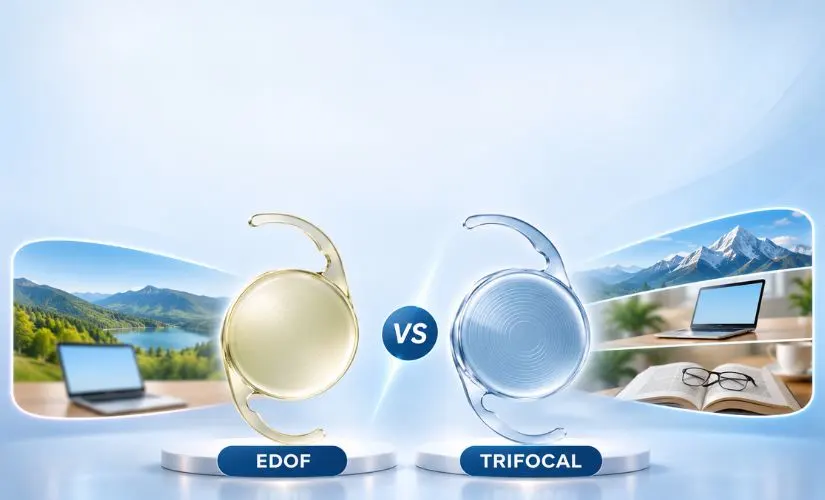
TECNIS Odyssey is a full visual range intraocular lens developed by Johnson & Johnson Vision. It is designed to provide continuous functional vision from near to far distances while addressing age-related loss of near focusing ability.
The lens uses specialised optical technology to support vision across different working distances. Its design also aims to manage certain unwanted visual effects associated with presbyopia-correcting IOLs.
Key Features of TECNIS Odyssey
TECNIS Odyssey offers several optical characteristics intended to support everyday visual activities. However, its performance depends on the patient's eye health, lens calculations, and individual visual requirements.
- Continuous range of vision: Supports activities requiring near, intermediate, and distance vision.
- Near-vision performance: Designed to improve reading and other close-distance activities compared with monofocal lenses.
- Contrast performance: Its optical design aims to maintain image quality across different lighting conditions.
- Astigmatism correction: Toric Odyssey variants can address suitable levels of corneal astigmatism.
- Reduced spectacle dependence: May decrease reliance on glasses for routine activities.
Some patients may still experience halos, glare, or difficulty with particular visual tasks, especially under challenging lighting conditions.
What is the Clareon PanOptix Pro Lens?
Clareon PanOptix Pro is a trifocal intraocular lens developed by Alcon. It is designed to provide functional vision at near, intermediate, and far distances through an optical system that distributes light across multiple focal points.
The lens incorporates ENLIGHTEN NXT optical technology, which improves light utilisation compared with the earlier PanOptix platform.
Key Features of PanOptix Pro
PanOptix Pro builds on the established PanOptix trifocal design while improving optical efficiency. Its design supports everyday activities requiring different viewing distances.
- Trifocal vision: Provides distinct focal points for distance, intermediate, and near activities.
- Improved light utilisation: Manufacturer laboratory data report 94% light utilisation, compared with 88% for the earlier PanOptix lens.
- Reduced optical scatter: The updated design reduces measured light scatter compared with the previous platform.
- Image contrast: Optical testing indicates improvements in certain contrast measurements.
- Spectacle independence: May reduce dependence on reading and distance glasses after cataract surgery.
The reported optical improvements do not guarantee better vision for every patient. Clinical outcomes depend on individual eye characteristics and postoperative healing.
TECNIS Odyssey vs PanOptix Pro: What Is the Difference?
Both TECNIS Odyssey and PanOptix Pro aim to improve vision across multiple distances after cataract surgery. The main difference lies in their optical designs and how they provide a useful range of focus.
Although both are premium presbyopia-correcting IOLs, neither can be considered universally better for every patient.
| Feature | TECNIS Odyssey | Clareon PanOptix Pro |
|---|---|---|
| Manufacturer | Johnson & Johnson Vision | Alcon |
| Lens category | Full visual range IOL | Trifocal IOL |
| Distance vision | Designed for clear distance vision | Designed for clear distance vision |
| Intermediate vision | Continuous functional range | Dedicated intermediate focal point |
| Near vision | Designed for close-distance activities | Dedicated near focal point |
| Optical emphasis | Range of focus and image quality | Light utilisation and reduced scatter |
| Astigmatism | Toric variants available | Toric options depend on market availability |
| Spectacle dependence | May be reduced | May be reduced |
The most appropriate lens depends on more than its optical specifications. Retinal health, corneal measurements, pupil characteristics, visual expectations, and sensitivity to glare all influence the final recommendation.
What are the Benefits and Limitations of FRV Lenses?
FRV lenses may provide greater independence from spectacles for several everyday activities. However, patients should understand that achieving a broader range of vision can involve optical trade-offs.
Potential Benefits
- Greater visual flexibility: Patients may perform activities at different distances without frequently changing glasses.
- Convenience: Reading, computer work, and outdoor activities may become easier.
- Astigmatism correction: Suitable toric variants can address corneal astigmatism during cataract surgery.
- Long-term lens replacement: The implanted IOL is intended to remain in the eye permanently.
Possible Limitations
- Halos and glare: Some patients notice rings around lights or increased glare, particularly at night.
- Reduced contrast sensitivity: Certain lighting conditions may make objects harder to distinguish.
- Residual spectacle requirement: Reading very small print or performing precision tasks may still require glasses.
- Adaptation: Visual adjustment may take time, and not everyone adapts equally.
These limitations make careful patient selection and realistic expectations particularly important.
Who is a Suitable Candidate for FRV Lenses?
FRV lenses may be suitable for cataract patients who want greater freedom from spectacles and have healthy supporting eye structures. A detailed ophthalmic examination is necessary before deciding whether Odyssey, PanOptix Pro, or another IOL is appropriate.
Patients with healthy corneas and retinas, predictable lens measurements, and realistic expectations may be considered for these lenses.
However, additional assessment may be necessary for individuals with:
- Significant dry eye disease or irregular corneal surfaces.
- Glaucoma affecting visual function.
- Macular degeneration or diabetic retinal disease.
- Previous refractive surgery.
- Conditions that reduce contrast sensitivity.
Before selecting an IOL, the ophthalmologist may perform optical biometry, corneal topography, retinal examination, and other relevant investigations. Patients should also discuss their daily activities, computer usage, reading habits, and night-driving requirements. These preferences help identify which visual distances matter most.
How Are FRV Lenses Implanted During Cataract Surgery?
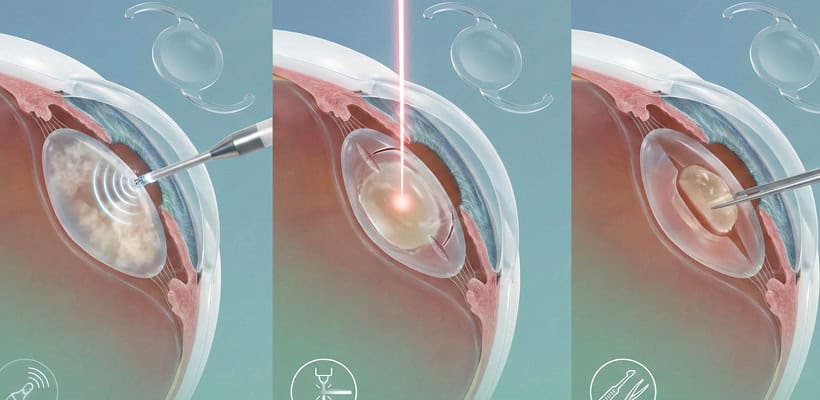
FRV lenses are implanted using the same general surgical approach as other modern intraocular lenses. The surgeon removes the cloudy natural lens and positions the selected artificial lens inside the remaining lens capsule.
The procedure generally follows these stages:
- Preoperative assessment: Eye measurements help determine lens power and suitability.
- Anaesthesia: Numbing eye drops or local anaesthesia help minimise discomfort.
- Cataract removal: The cloudy lens is fragmented and removed, commonly using phacoemulsification.
- IOL implantation: The selected lens is inserted and positioned inside the eye.
- Postoperative monitoring: Follow-up examinations assess healing, lens position, and vision.
Vision may improve within the first few days, although stabilisation can take several weeks. Patients must use prescribed eye drops and avoid rubbing their eyes. Sudden vision loss, severe pain, increasing redness, or new flashes and floaters require urgent ophthalmic assessment.
Conclusion
TECNIS Odyssey and Clareon PanOptix Pro represent different approaches to improving vision across multiple distances after cataract surgery. Both aim to reduce dependence on spectacles, although their optical designs and visual characteristics differ.
Choosing an FRV lens requires careful assessment of eye health, lifestyle requirements, and tolerance for potential visual disturbances. Neither lens guarantees complete freedom from glasses.
Patients considering cataract surgery should discuss the benefits and limitations of available IOL options with an ophthalmologist. At Surya Eye Hospital, detailed cataract evaluation can help guide an individualised lens selection and treatment plan.
Frequently Asked Questions
1. Can FRV lenses eliminate the need for glasses?
FRV lenses may significantly reduce dependence on glasses, but complete spectacle independence is not guaranteed. Some patients may still need glasses for very small print, prolonged reading, night driving, or tasks requiring particularly precise vision.
2. Are TECNIS Odyssey and PanOptix Pro suitable for night driving?
Both lenses are designed to support distance vision, including activities performed in low light. However, halos and glare may occur. Patients who drive frequently at night should discuss these visual effects before selecting a lens.
3. How long does it take to adjust to an FRV lens?
Adjustment varies between patients. Some notice functional vision improvements within days, while others need several weeks or longer to adapt. Healing, residual prescription errors, dry eye, and individual visual processing can influence the adjustment period.
4. Can FRV lenses correct astigmatism during cataract surgery?
Certain FRV lens models are available in toric versions that correct corneal astigmatism. Suitability depends on its degree and pattern, corneal measurements, and available lens powers. The ophthalmologist determines whether a toric IOL would be beneficial.
5. Are FRV lenses permanent after cataract surgery?
FRV lenses are designed for permanent implantation and generally do not require routine replacement. However, complications or significant visual problems may occasionally require additional treatment. Patients should continue regular eye examinations to monitor their overall eye health.
6. How do doctors decide between TECNIS Odyssey and PanOptix Pro?
Ophthalmologists consider corneal health, retinal function, astigmatism, lifestyle, and visual priorities when selecting an IOL. They also discuss possible glare, contrast changes, and spectacle requirements. The preferred lens depends on individual examination findings and expectations.
Get expert guidance on lens choices, surgery planning and the approach suited to your vision needs.