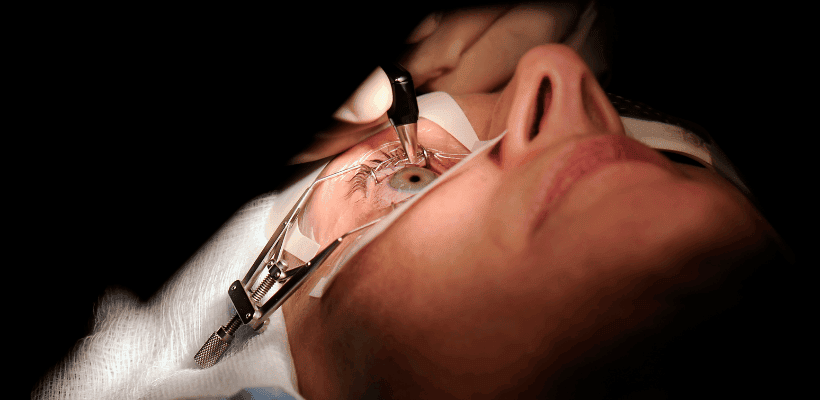


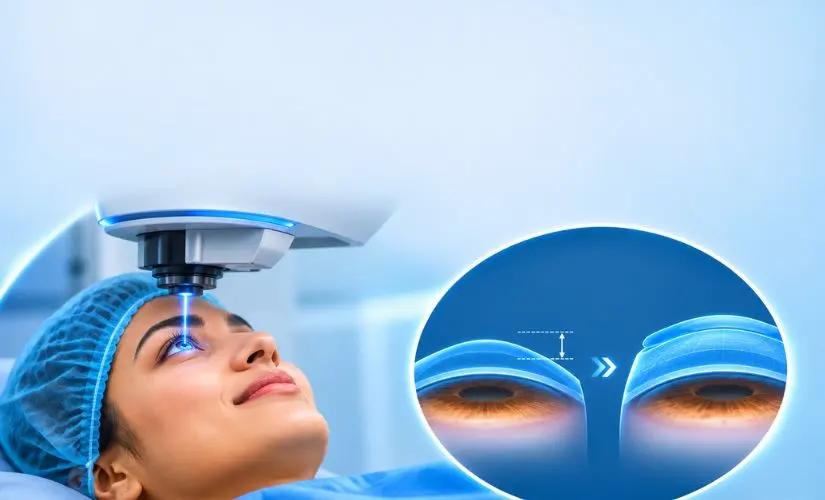

LASIK surgery can reduce dependence on glasses or contact lenses, but not everyone has the corneal thickness required for the procedure. People with thin corneas may face additional risks because LASIK removes corneal tissue to correct vision. However, a thin cornea does not automatically rule out every form of refractive surgery.
At Surya Eye Hospital, patients considering LASIK surgery for thin cornea undergo corneal mapping and assessment to determine their suitability for vision correction. Understanding how corneal thickness affects surgical decisions can help patients explore suitable options without compromising long-term eye health.
What is a Thin Cornea?
A thin cornea has less tissue thickness than the average healthy cornea. Since the cornea provides much of the eye's focusing power, its thickness, shape, and structural stability influence whether laser vision correction is appropriate.
The average central corneal thickness is approximately 540-550 microns, although healthy measurements vary between individuals. A measurement below 500 microns may require closer evaluation before refractive surgery.
Corneal thinning may be associated with:
- Natural variation: Some people have naturally thinner corneas without an underlying disease.
- Keratoconus: A condition that progressively weakens and changes the cornea's shape.
- Previous eye surgery: Certain procedures can reduce corneal tissue thickness.
- Other corneal disorders: Some conditions affect corneal structure and stability.
Importantly, having a thin cornea does not necessarily mean it is unhealthy. Surgeons must distinguish naturally thin, stable corneas from those showing signs of progressive weakness.
Can You Get LASIK Surgery with Thin Corneas?
LASIK may be possible for selected patients with mildly thin but structurally healthy corneas. However, patients with insufficient corneal tissue or abnormal corneal shape may require an alternative procedure.
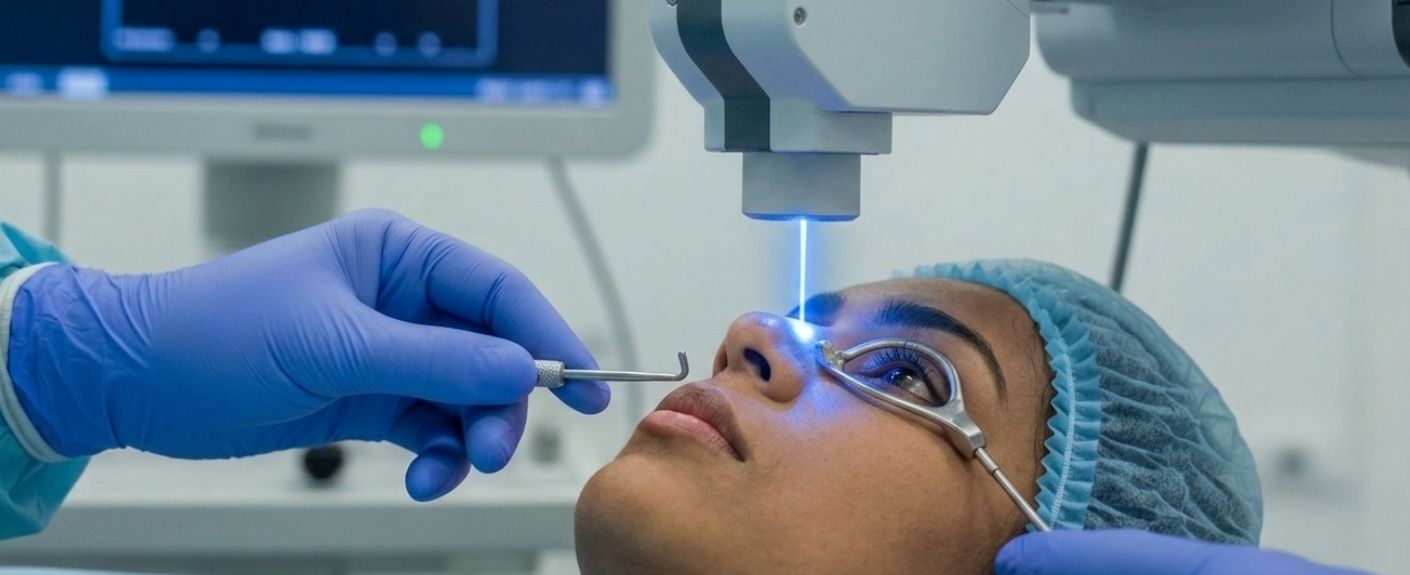
Traditional LASIK creates a thin flap on the cornea before an excimer laser reshapes the underlying tissue. Both flap creation and laser treatment affect the cornea's structural integrity.
The decision depends on several factors:
- Corneal thickness: Whether sufficient tissue will remain after surgery.
- Prescription strength: Higher refractive errors generally require greater tissue removal.
- Corneal shape: Irregular curvature may indicate keratoconus or another abnormality.
- Residual stromal bed: The amount of supporting corneal tissue expected to remain after LASIK.
- Corneal stability: Evidence of progressive thinning or shape changes may make surgery unsuitable.
One concern is postoperative corneal ectasia, a condition in which the cornea progressively weakens and bulges forward, causing distorted vision. There is no single corneal thickness measurement that guarantees LASIK safety. Even patients meeting commonly used thickness criteria require comprehensive screening.
How Do Eye Specialists Determine LASIK Eligibility?
Eye specialists determine eligibility through corneal measurements, prescription assessment, and examination of overall eye health. These investigations help identify whether surgery can correct vision while preserving sufficient corneal strength.
Important Tests Before LASIK
A detailed preoperative assessment may include:
- Pachymetry: Measures corneal thickness and identifies areas of thinning.
- Corneal topography: Maps the cornea's surface curvature to detect irregularities.
- Corneal tomography: Evaluates anterior and posterior corneal surfaces and thickness distribution.
- Corneal biomechanics assessment: Provides information about corneal deformation and structural behaviour.
- Refraction testing: Determines spectacle power and whether the prescription has remained stable.
- Dry-eye evaluation: Identifies tear-film problems that could affect comfort and recovery.
Surgeons also calculate the expected residual stromal bed thickness after treatment. A residual stromal bed of at least 250 microns has historically been suggested as a minimum, while preserving approximately 300 microns or more is generally preferred. However, these numbers are not universal safety thresholds.
For patients considering LASIK eye surgery with thin corneas, the combined findings are more meaningful than any individual measurement.
What are the Available Vision Correction Options for Thin Corneas?
Patients unsuitable for conventional LASIK may still qualify for alternative refractive procedures. The appropriate treatment depends on corneal stability, refractive error, eye anatomy, and the amount of tissue correction required.
1. Epi Contoura or Surface Laser Treatment
Epi Contoura is a flap-free surface laser procedure that reshapes the cornea without creating a traditional LASIK flap. It may be considered for selected patients whose corneas are unsuitable for flap-based surgery.
The procedure removes the surface epithelial layer before applying laser correction. A protective contact lens supports healing while the epithelium regenerates.
Because no flap is created, Epi Contoura may preserve more underlying tissue than conventional LASIK. However, it still removes corneal tissue, making thickness and structural stability essential considerations.
2. Photorefractive Keratectomy (PRK)
PRK corrects refractive errors by reshaping the corneal surface without creating a flap. It may be suitable for certain patients with thinner corneas and otherwise healthy corneal structure.
Healing generally takes longer than conventional LASIK because the surface epithelium must regenerate. Temporary discomfort, light sensitivity, and blurred vision can occur during recovery.
3. Implantable Collamer Lens (ICL)
ICL surgery places a specially designed lens inside the eye, usually behind the iris and in front of the natural lens. Unlike corneal laser surgery, ICL does not require removing corneal tissue. It may be considered for patients with significant myopia or inadequate corneal thickness for laser correction.
However, suitability depends on internal eye measurements, including anterior chamber depth and endothelial cell health. Potential complications include raised eye pressure, cataract formation, and other intraocular risks.
How Do These Procedures Compare?
| Procedure | Corneal flap | Corneal tissue removal | Important consideration |
|---|---|---|---|
| Traditional LASIK | Yes | Yes | Requires adequate residual corneal tissue |
| Epi Contoura | No | Yes | Surface healing takes longer |
| PRK | No | Yes | May suit selected thinner corneas |
| ICL | No | No | Requires suitable internal eye anatomy |
No procedure is automatically safer for every patient. The final recommendation should follow individual examination rather than corneal thickness alone.
What are the Benefits and Risks of LASIK for Thin Corneas?
For appropriately selected patients, refractive surgery may improve unaided vision and reduce dependence on corrective eyewear. However, thinner corneas require additional attention because removing tissue can affect long-term corneal stability.
Potential benefits include improved distance vision, greater convenience during daily activities, and reduced reliance on glasses or contact lenses.
Possible risks include:
- Corneal ectasia: Progressive corneal weakening and irregular bulging.
- Dry eyes: Temporary or persistent dryness following surgery.
- Visual disturbances: Glare, halos, or difficulty seeing clearly at night.
- Undercorrection or overcorrection: Residual refractive error requiring glasses or further assessment.
- Corneal haze: A possible complication following surface laser procedures.
Importantly, patients with suspected keratoconus should not undergo routine corneal laser refractive surgery. Alternative vision correction or treatment to stabilise the cornea may be necessary.
Recovery and Aftercare Following Vision Correction
Recovery depends on the procedure performed and the condition of the patient's eyes. Conventional LASIK generally provides faster initial visual improvement, while surface procedures require additional time for epithelial healing.
Following Epi Contoura or PRK, patients may experience watering, irritation, light sensitivity, and fluctuating vision for several days.
Recovery precautions generally include:
- Use prescribed eye drops according to the ophthalmologist's instructions.
- Avoid rubbing or pressing the eyes.
- Wear protective eyewear when recommended.
- Avoid swimming and potentially contaminated water until cleared.
- Limit activities that may expose healing eyes to injury.
- Attend scheduled follow-up examinations.
ICL recovery follows a different pathway because the procedure involves placing a lens inside the eye rather than reshaping the cornea.
Conclusion
LASIK surgery for thin corneas requires careful evaluation because corneal thickness directly influences surgical planning and long-term stability. Some patients with naturally thin but healthy corneas may still qualify for LASIK, while others may benefit from alternatives such as Epi Contoura, PRK, or ICL.
A comprehensive examination helps identify underlying conditions, estimate tissue requirements, and minimise avoidable risks. Patients who have previously been advised against LASIK can get a detailed refractive assessment at Surya Eye Hospital rather than assuming that all vision correction procedures are unsuitable.
Ultimately, selecting the appropriate treatment matters more than choosing a particular surgical technology.
Frequently Asked Questions
1. What is the minimum corneal thickness required for LASIK?
There is no universally safe minimum corneal thickness for LASIK. Surgeons assess the original thickness, planned tissue removal, residual stromal bed, and corneal shape. A thin cornea may still require additional testing despite otherwise normal measurements.
2. Is 480-micron corneal thickness suitable for LASIK?
A corneal thickness of 480 microns does not automatically exclude LASIK, but it requires careful evaluation. The decision depends on prescription strength, corneal shape, expected tissue removal, and whether sufficient structural support will remain after surgery.
3. Can thin corneas become thicker naturally?
Naturally thin corneas generally do not become substantially thicker through diet, supplements, or eye exercises. Certain treatments can strengthen corneal tissue in specific diseases, but they do not necessarily restore normal thickness or make LASIK suitable.
4. Is ICL safer than LASIK for thin corneas?
ICL may be preferable when inadequate corneal thickness makes LASIK unsuitable because it does not remove corneal tissue. However, ICL involves surgery inside the eye and carries different risks. Individual eye anatomy determines whether it is appropriate.
5. Can LASIK cause keratoconus in someone with thin corneas?
LASIK does not directly cause keratoconus, but it can contribute to postoperative corneal ectasia in susceptible eyes. Existing corneal abnormalities, inadequate residual tissue, and other risk factors increase concern, making detailed preoperative screening particularly important.
6. Can I undergo LASIK if I have keratoconus?
Conventional LASIK is generally contraindicated in patients with keratoconus because removing corneal tissue may worsen structural instability. Treatment may instead involve specialised contact lenses or corneal cross-linking, depending on disease progression, visual requirements, and clinical findings.
Understand your suitability and the right treatment approach before you decide.