
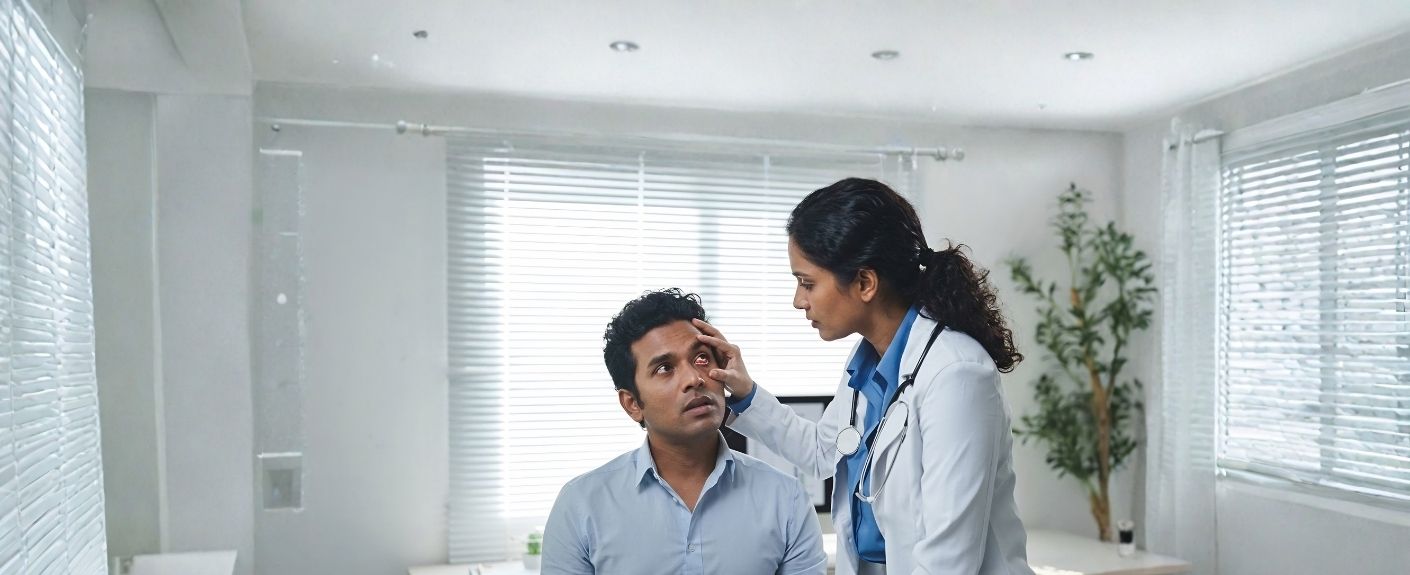

Eye injuries may occur at any time, at home, in the workplace, in sports, and even when cooking. The eyes are sensitive organs, and any slight injury has the capability of interfering with vision unless well addressed. First aid and immediate response can save long-term injury.
It is highly important to know what to do in various kinds of eye injuries. Meanwhile, prevention contributes significantly to vision protection.
Some key steps are described in a practical and understandable manner below.
Common Types of Eye Injuries
The eye injuries may be mildly irritated or traumatized. Learning the type will make you answer correctly.
Common types include:
- Foreign body in the eye – dust, sand, metal particles, insects
- Chemical injury – acid, alkali, cleaning agents, hand sanitiser
- Blunt trauma – hit by a ball, fist, or fall
- Sharp object injury – knife tip, metal, wood splinter
- Burns – thermal or radiation (welding arc)
- Scratches (corneal abrasion) – fingernail, paper edge
- Black eye – bruising around the eye
- Cut or puncture wound
Every kind demands a new approach. Things such as pain, redness, blurred vision, or light sensitivity should never be overlooked.
General First Aid Rules for Any Eye Injury
The general safety rules before attending to specific injuries include:
- Stay calm and avoid panic.
- Do not rub the eye.
- Wash your hands and then touch the eye area.
- Avoid applying pressure.
- Do not attempt to extract embedded objects.
- Do not take cotton buds or sharp things.
- Do not use ointments without a doctor's recommendation.
- Consult the doctor in case of pain or vision alterations.
When the individual wears contact lenses, they should be removed as gently as possible, except in case of a severe injury or a foreign object.
What To Do If Something Gets Into the Eye
Common causes of irritation include dust, sand, or small particles.
Steps to follow:
- Ask the person not to rub the eye.
- Wash your hands properly.
- Blink several times to allow natural tears to wash it out.
- Rinse the eye with clean water or sterile saline.
- Use a clean cup to pour water gently from the inner corner outward.
- Use an eye wash station if it is available.
Avoid:
- Rubbing the eye.
- Putting cloth or tissue in the eye.
- Attempting to extract metal or glass particles by yourself.
In case the discomfort is not removed by washing, see an ophthalmologist at once.
Read More:
What To Do In Case of Chemical Injury
Chemical burns are medical emergencies. Immediate action can save vision.
Common chemicals include:
- Toilet cleaners
- Bleach
- Battery acid
- Cement
- Pesticides
- Hand sanitiser
Immediate steps:
- Begin rinsing the eye.
- Use clean running water.
- Flush repeatedly for at least 15-20 minutes.
- Wash, keeping eyelids open.
- Remove contact lenses when rinsing.
- Do not delay washing to find eye drops.
Although the pain may go away, consult an emergency eye specialist as soon as possible. Alkali injuries (like cement or ammonia) are especially serious.
What To Do In Case of a Blow or Blunt Injury
A hit from a ball, elbow, or fall can cause internal damage even if there is no visible wound.
Symptoms may include:
- Pain
- Swelling
- Bruising
- Blurred or double vision
- Blood inside the eye
Immediate care:
- Apply a cold compress gently over the closed eyelid.
- Do not apply pressure.
- Keep the head elevated.
- Avoid heavy activity.
Seek medical help if:
- Vision decreases
- Severe pain occurs
- Bleeding is visible
- Nausea or headache develops
Blunt trauma may result in internal bleeding or damage to the retina that requires immediate assessment.
What To Do If There Is a Cut, Scratch, or Object Stuck in the Eye
Sharp injuries are serious and not to be treated carelessly.
If there is:
- A visible object stuck in the eye
- A deep cut
- Bleeding from the eyeball
Do not:
- Try to remove the object.
- Wash vigorously.
- Apply pressure.
- Apply ointment.
Instead:
- Gently cover the eye with a clean shield.
- Avoid movement.
- Request emergent treatment.
For minor scratches (corneal abrasions):
- There may be mild pain and watering.
- Avoid rubbing.
- Consult a doctor for antibiotic drops.
Small scratches may result in infection unless they are treated.
When To Seek Immediate Medical Attention
Some symptoms demand an immediate appointment with an eye specialist.
In case of an emergency, seek assistance when you notice:
- Sudden loss of vision
- Severe eye pain
- Light sensitivity
- Blood inside the eye
- Persistent redness
- Severe swelling
- Pupil size changes
- Double vision
- Headache with nausea
The evaluation of children with eye injuries should be urgent.
Treatment delay may result in complications such as infection, glaucoma, retinal detachment, or irreversible vision impairment.
If your symptoms persist or vision is affected, it’s crucial to consult an eye specialist in Mumbai for professional diagnosis and treatment.
Watch this:
Important Tips To Prevent Eye Injuries
It is always better to prevent than to treat. With simple measures, many eye injuries are avoidable.
At Home:
- Keep chemicals out of reach of children.
- Use protective gloves and goggles while cleaning.
- Be careful while cutting vegetables.
- Avoid firecracker exposure.
- Store sharp objects responsibly.
At Workplace:
- Use safety goggles at the factory.
- Wear protective shields during welding.
- Adhere to industrial safety.
- Do not take off the protective eyewear even for short chores.
During Sports:
- Wear sports-specific protective eyewear.
- Wear face guard helmets where necessary.
- Avoid rough play without protection.
For Children:
- Do not give sharp toys.
- Monitor while using pencils and scissors.
- Avoid laser pointers.
Digital Safety:
- Follow the 20-20-20 rule for screen use.
- Maintain proper lighting.
- Avoid excessive eye rubbing.
Small precautions can greatly help mitigate risk.
Read More: Eye Exercises for Vision Health
Long-Term Eye Care and Vision Protection
In addition to emergency care, long-term eye protection is also significant.
Regular eye check-ups:
- An eye check is advisable once a year.
- Complications are avoided by early diagnosis.
Healthy lifestyle:
- Consume food high in Vitamin A (carrots, spinach).
- Stay hydrated.
- Manage diabetes and hypertension.
Avoid harmful habits:
- Do not self-medicate with eye drops.
- Avoid steroid drops without a prescription.
- Do not ignore minor injuries.
Protect from sunlight:
- Use UV-protected sunglasses.
- Do not expose oneself directly to the sun during peak hours.
Contact lens hygiene:
- Wash your hands before handling.
- Do not sleep with lenses.
- Replace lenses as advised.
Your eyes are irreplaceable. Protecting them should be a daily priority.
Watch this:
Final Thoughts
Eye injuries are sudden and unpredictable; they can occur at home, in the workplace, at school, and even during sports. Even such a petty accident can cause severe problems when it is not dealt with in a proper way. Timely intervention is a big difference between saving sight and losing it.
It is important to know what to do in the case of first aid. Even basic measures such as rinsing the eye in the right way, not rubbing it, and just not putting pressure on it can help stop the additional damage. In difficult situations, it is essential to seek immediate medical assistance.
Long-term problems can be caused by neglect of symptoms like pain, blurred vision, redness, or sensitivity to light. Early detection and prompt care have a significant positive effect on recovery outcomes and low chances of irreversible vision loss.
The best approach is prevention. Eye injuries can be greatly minimized with the use of protective eyewear, scrutinizing chemicals, adult supervision of children, and adherence to workplace safety measures.
What soft jewels are your eyes. Eye safety and regular eye check-ups, together with healthy daily habits, will conserve intelligent and comfortable vision for many years to come.
FAQs
What should I do immediately after an eye injury?
Avoid rubbing or pressing the injured eye. Depending on the injury, gently rinse the eye if appropriate and seek medical attention if there is significant pain, persistent redness, bleeding, blurred vision or any change in vision.
Can I wash my eye with water after an injury?
Yes, for chemical exposure or loose particles such as dust, immediately rinsing the eye with plenty of clean water can help. However, do not wash or manipulate the eye if a sharp object is embedded or a penetrating injury is suspected.
What should I do if a chemical gets into my eye?
Immediately flush the eye continuously with clean running water for at least 15-20 minutes while keeping the eyelids open. Do not wait for eye drops or attempt to neutralise the chemical. Seek urgent medical attention afterwards.
Should I remove an object stuck in my eye?
No. If an object appears embedded in or has penetrated the eye, do not attempt to remove it yourself. Avoid pressure on the eye, protect it from further injury and seek emergency ophthalmic care.
Can a minor eye injury heal on its own?
Some minor irritations or superficial injuries may improve without treatment. However, an injury that causes persistent pain, watering, redness, light sensitivity or blurred vision should be examined because the extent of eye damage may not always be visible.
How do I know if an eye injury is serious?
Severe pain, decreased or double vision, bleeding, marked swelling, an irregular pupil, light sensitivity or an object penetrating the eye are warning signs. Chemical injuries and significant blunt or sharp trauma also require prompt medical assessment.
Can rubbing the eye after an injury make it worse?
Yes. Rubbing can worsen a corneal scratch, push a foreign particle deeper into the eye or aggravate an existing injury. It is safer to avoid rubbing until the cause of the discomfort has been identified.
Can I use eye drops after an eye injury?
Avoid using medicated eye drops, particularly steroid or antibiotic drops, without medical advice. The appropriate treatment depends on the type and severity of the injury. For chemical exposure, immediate irrigation takes priority over looking for eye drops.
Should a child with an eye injury always see an eye doctor?
Eye injuries in children deserve particular caution because children may have difficulty describing pain or changes in vision. Injuries involving sharp objects, chemicals, significant trauma, persistent symptoms or any change in vision should be evaluated promptly.
When should I go to the emergency room for an eye injury?
Seek emergency care for sudden vision loss, chemical burns, penetrating injuries, severe pain, bleeding from or inside the eye, significant trauma or sudden vision changes after an injury. These conditions can threaten vision if treatment is delayed.
Get clear, personalized guidance on your symptoms, diagnosis or recommended treatment.