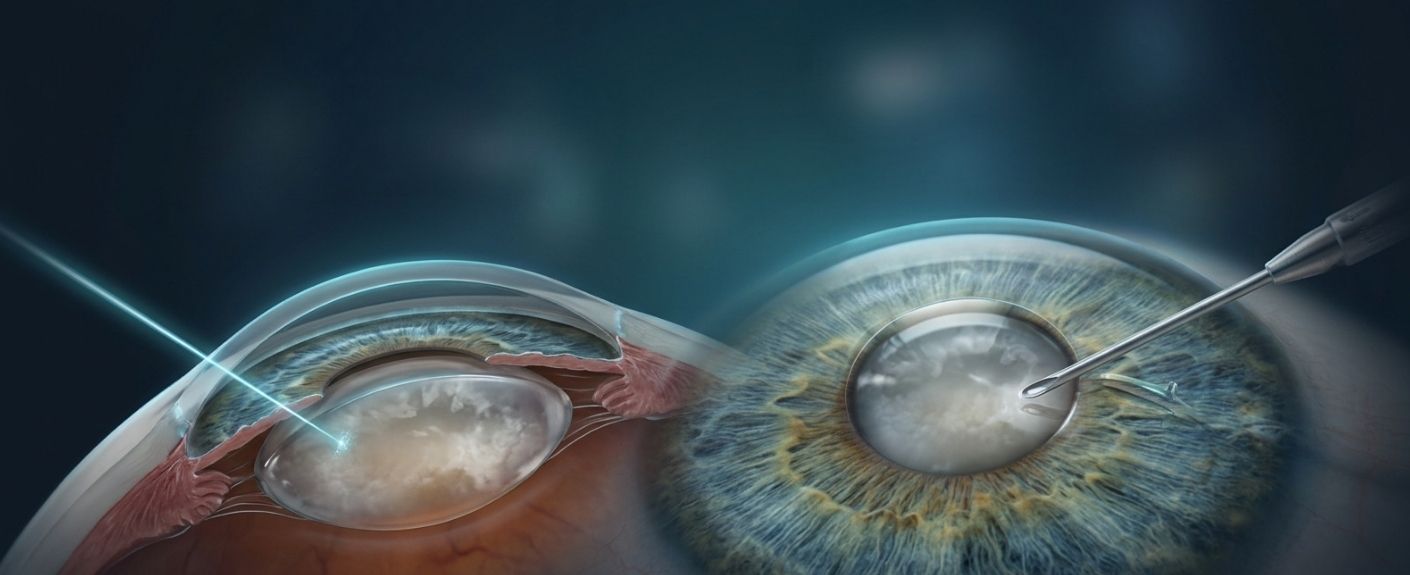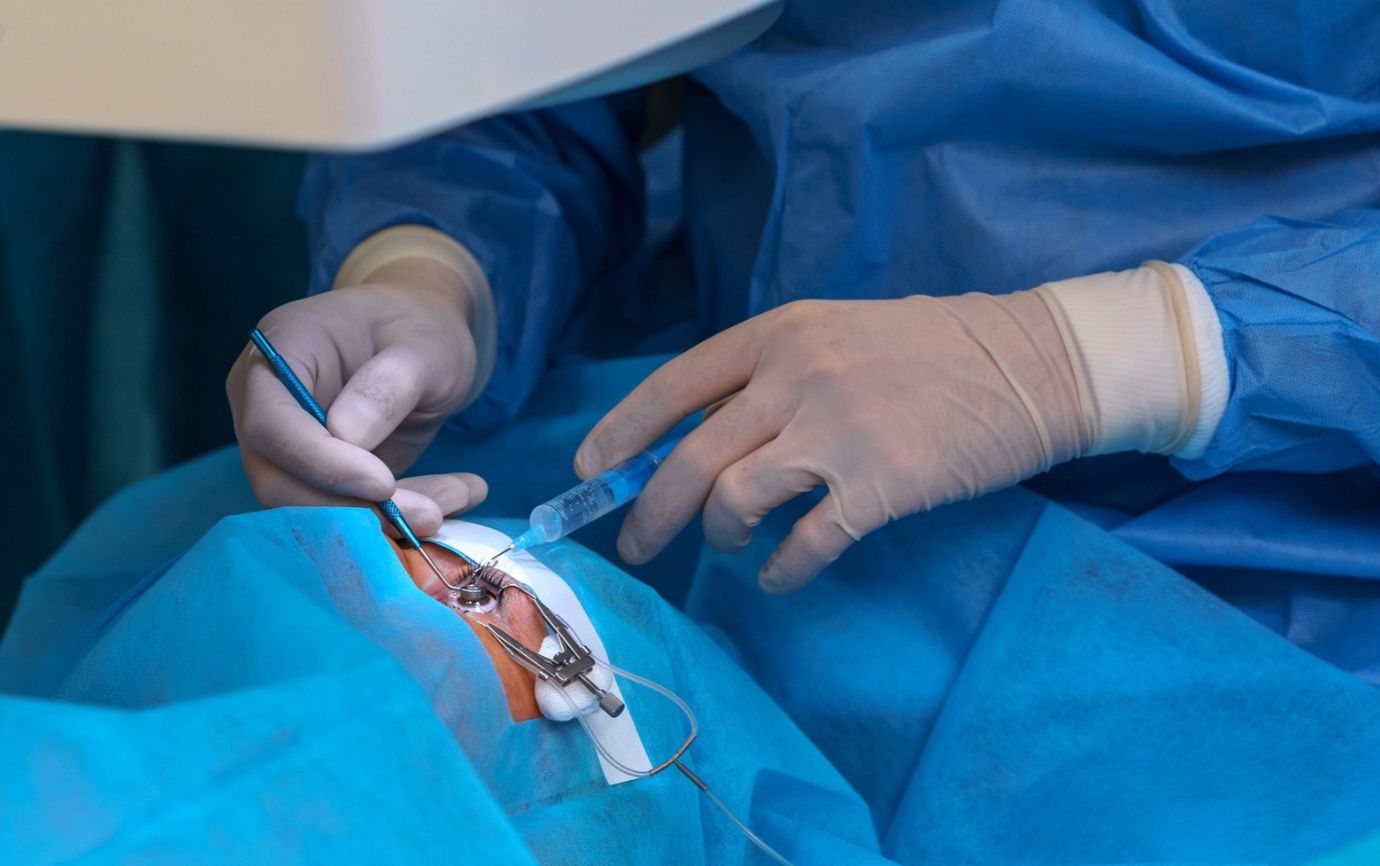



Cataract surgery removes the eye’s cloudy natural lens and replaces it with an artificial intraocular lens, or IOL. While removing the cataract restores clarity, the type of IOL selected can also influence how well you see at different distances after surgery.
There are several types of IOL for cataract surgery, including monofocal, multifocal, toric, extended depth-of-focus (EDOF), accommodative, and light-adjustable lenses. Each has a different optical design and may suit different visual requirements.
At Surya Eye, we assess your eye health, refractive error, lifestyle, daily visual activities, and treatment goals before discussing suitable IOL options. Measurements of the eye also help determine the appropriate lens power before cataract surgery.
What is an IOL in Cataract Surgery?
An intraocular lens (IOL) is a clear artificial lens placed inside the eye after the cloudy natural lens is removed during cataract surgery. It remains inside the eye and performs the focusing role previously handled by the natural lens.
IOLs are available in different focusing powers and optical designs. Depending on the lens selected, they may provide:
- Clear vision at one main distance
- A broader range of distance and intermediate vision
- Near, intermediate, and distance vision in selected lens designs
- Correction of pre-existing regular corneal astigmatism
- Some reduction in dependence on spectacles
The appropriate IOL cannot be selected from the lens type alone. Eye measurements, corneal condition, retinal health, previous eye surgery, visual expectations, and other clinical factors also need to be considered.
What Are the Different Types of IOL for Cataract Surgery?
The main types of IOL include monofocal, multifocal, toric, EDOF, accommodative, and light-adjustable lenses. The key difference is the range of vision each lens is designed to provide and whether it can address additional refractive errors such as astigmatism.
Monofocal IOL
A monofocal IOL provides a single primary focus, most commonly for distance vision. If the lens is targeted for distance, reading glasses are usually needed for close work.
A monofocal lens may be considered when the priority is clear vision at one selected distance rather than reducing spectacle use across several ranges.
Depending on the treatment plan, the lens can be targeted for:
- Distance vision: For activities such as walking, watching television, or driving
- Near vision: Less commonly selected as the primary target
- Monovision: In selected patients, one eye may be targeted differently from the other to broaden functional vision
Patients should understand their likely spectacle requirements before surgery because a standard monofocal IOL does not provide simultaneous near, intermediate, and distance focus.
Multifocal IOL
Multifocal IOLs contain different optical zones designed to provide focus at more than one distance. They may reduce dependence on glasses for activities such as reading and distance viewing in appropriately selected patients.
Some multifocal designs also provide an intermediate focal range, while trifocal IOLs specifically aim to provide near, intermediate, and distance vision.
However, no lens provides exactly the same visual experience as a young natural lens. Some patients may notice visual phenomena such as glare or halos, particularly around lights at night. Eye health, pupil characteristics, visual expectations, and lifestyle therefore matter when considering these lenses.
Toric IOL
A toric IOL is designed to correct regular corneal astigmatism during cataract surgery. It can reduce residual astigmatism after surgery while also replacing the cloudy natural lens.
Importantly, toric describes the astigmatism-correcting component of an IOL rather than a completely separate focusing category.
Toric technology may be available with:
- Monofocal IOLs
- Enhanced monofocal designs
- Selected multifocal lenses
- Selected EDOF lenses
Toric IOLs must be positioned at a specific orientation inside the eye to provide the intended astigmatism correction. Accurate preoperative corneal measurements are therefore important.
They are mainly designed for regular corneal astigmatism. Irregular astigmatism caused by certain corneal disorders or scars requires individual assessment.
Extended Depth-of-Focus (EDOF) IOL
An EDOF IOL is designed to create an extended range of focus rather than several separate focal points. It mainly aims to provide functional distance and intermediate vision.
Intermediate vision is particularly relevant for activities such as:
- Working on a computer
- Viewing a dashboard
- Cooking
- Using certain digital devices
- Performing tasks at arm's length
Near vision can vary between patients and lens designs, so reading glasses may still be required for small print or close work.
EDOF lenses may be considered for patients who want a broader visual range than a conventional monofocal lens provides, but suitability still depends on the condition of the eye and individual visual priorities.
Accommodative IOL
Accommodative IOLs are designed to provide a broader focusing range by responding to changes within the eye's focusing system. They aim to improve functional vision across more than one distance.
The actual amount of near or intermediate vision achieved can vary, however. These lenses should not be presented as guaranteeing completely glasses-free vision.
At Surya Eye Hospital, accommodative lenses are among the IOL categories that may be discussed when clinically suitable. Lens choice is based on the patient's examination, measurements, visual requirements, and treatment goals.
Light-Adjustable Lens (LAL)
A light-adjustable lens is a type of IOL whose focusing power can be modified after cataract surgery. Adjustments are performed after the eye has begun healing, allowing residual refractive error to be refined.
Unlike conventional IOLs, whose optical power is fixed when implanted, an LAL uses a photosensitive lens material.
After surgery:
- Vision and refractive error are assessed.
- A specialised light treatment is used to alter the lens power when required.
- Additional adjustments may be performed according to the treatment protocol.
- The selected lens power is eventually stabilised using final light treatments.
Suitability, treatment requirements, and postoperative precautions should be discussed with the cataract surgeon beforehand.
Monofocal vs Multifocal vs EDOF IOL: What Is the Difference?
Monofocal, multifocal, and EDOF IOLs mainly differ in the range of vision they are designed to provide. A monofocal lens focuses primarily at one distance, while multifocal and EDOF designs aim to broaden functional vision.
| Feature | Monofocal IOL | Multifocal IOL | EDOF IOL |
| Main visual range | One selected distance | Multiple focal distances | Distance and extended intermediate range |
| Near vision | Usually requires glasses if targeted for distance | May provide useful near vision | May still require reading glasses |
| Intermediate vision | Depends on target and individual vision | Available with suitable designs | One of its main intended ranges |
| Spectacle dependence | Usually higher for untargeted distances | May be reduced | May be reduced for distance and intermediate tasks |
| Glare/halos | Generally less associated with multifocal-type optical effects | May occur in some patients | Can occur depending on lens design |
| Astigmatism correction | Toric versions may be available | Toric versions may be available | Toric versions may be available |
The comparison does not mean one IOL is universally better than another. The clinically appropriate option depends on eye health and what kinds of vision matter most in everyday life.
How is the Right IOL Selected for Cataract Surgery?
The right IOL is selected after evaluating both the physical characteristics of the eye and the patient's visual requirements. Lens choice should therefore be personalised rather than based only on whether a particular IOL is labelled “premium.”
At Surya Eye Hospital, our cataract evaluation considers factors such as:
- Eye length: Used in calculating the required IOL power
- Corneal curvature: Helps determine focusing power and detect astigmatism
- Corneal health: Certain corneal conditions can affect lens suitability
- Retinal and macular health: Important when considering lenses that divide or extend focus
- Previous eye surgery: Previous refractive procedures may influence IOL calculations
- Astigmatism: Helps determine whether a toric option may be appropriate
- Lifestyle: Reading, computer work, driving, and other daily activities affect visual priorities
- Spectacle preference: Some patients prioritise reducing glasses use, while others prioritise a particular quality or range of vision
Surya Eye Hospital uses preoperative eye measurements to calculate IOL power and assess lens options before cataract surgery.
Can an IOL Reduce the Need for Glasses After Cataract Surgery?
Yes, certain IOLs can reduce dependence on glasses, but no lens should be assumed to guarantee complete spectacle independence. The result depends on lens design, eye health, healing, refractive accuracy, and the visual task being performed.
For example:
- A distance-focused monofocal IOL usually still requires reading glasses.
- A multifocal or trifocal IOL may reduce the need for glasses across several distances in suitable patients.
- An EDOF IOL may provide greater independence for distance and intermediate tasks, while near glasses may still be needed.
- A toric IOL may reduce spectacle correction needed for regular astigmatism.
- An LAL allows postoperative refinement of refractive power in suitable patients.
The aim is therefore not simply to choose the lens promising the widest range. The goal is to select an IOL whose optical characteristics fit the patient's eyes and visual priorities.
Read More: Premium Intraocular Lenses (IOLs): Types, Benefits & Costs
What Should You Discuss With Your Eye Surgeon Before Choosing an IOL?
Before choosing an IOL, discuss how you use your vision throughout the day and what you expect after cataract surgery. These details can be as important as the technical differences between lenses.
Useful points to discuss include:
- How frequently you read books or small print
- Whether you spend long periods working on a computer
- Whether night driving is important to you
- Your current dependence on spectacles
- Whether you have astigmatism
- Any previous eye surgery
- Existing corneal, retinal, glaucoma, or other eye conditions
- Your willingness to use reading or distance glasses after surgery
- Possible glare, halos, or other optical effects associated with some lens designs
It also helps to clarify what the lens cannot provide. Realistic expectations are an important part of IOL selection because postoperative vision can differ even among patients receiving the same type of lens.
Frequently Asked Questions
Which type of IOL is commonly used for cataract surgery?
Monofocal IOLs are widely used because they provide a clear focal point, commonly for distance vision. However, the appropriate lens depends on your eye health, refractive error, astigmatism, lifestyle, and preferred level of spectacle dependence.
Is a multifocal IOL better than a monofocal IOL?
Neither lens is universally better. Multifocal IOLs may provide vision across several distances, while monofocal lenses provide one primary focal point. Your eye health, night-vision requirements, visual expectations, and tolerance for optical effects influence suitability.
Can I get rid of glasses completely after cataract surgery?
Some IOLs can reduce dependence on spectacles, but complete freedom from glasses cannot be guaranteed. You may still require glasses for certain distances or detailed tasks depending on the lens selected, healing, refractive outcome, and individual vision.
Who may need a toric IOL during cataract surgery?
A toric IOL may be considered when clinically significant regular corneal astigmatism is present along with cataract. Corneal measurements determine whether toric correction is appropriate, while irregular astigmatism or other eye conditions may require a different approach.
Do EDOF lenses provide good reading vision?
EDOF lenses are primarily designed to extend functional vision from distance through the intermediate range. Some patients may achieve useful nearer vision, but reading glasses can still be necessary for small print and tasks performed at close distances.
Can the IOL be changed after cataract surgery?
An implanted IOL can sometimes be exchanged when there is a specific clinical reason, but this requires another intraocular procedure. Light-adjustable lenses differ because their optical power can be modified after implantation using specialised postoperative light treatments.
Understand your suitability and the right treatment approach before you decide.