
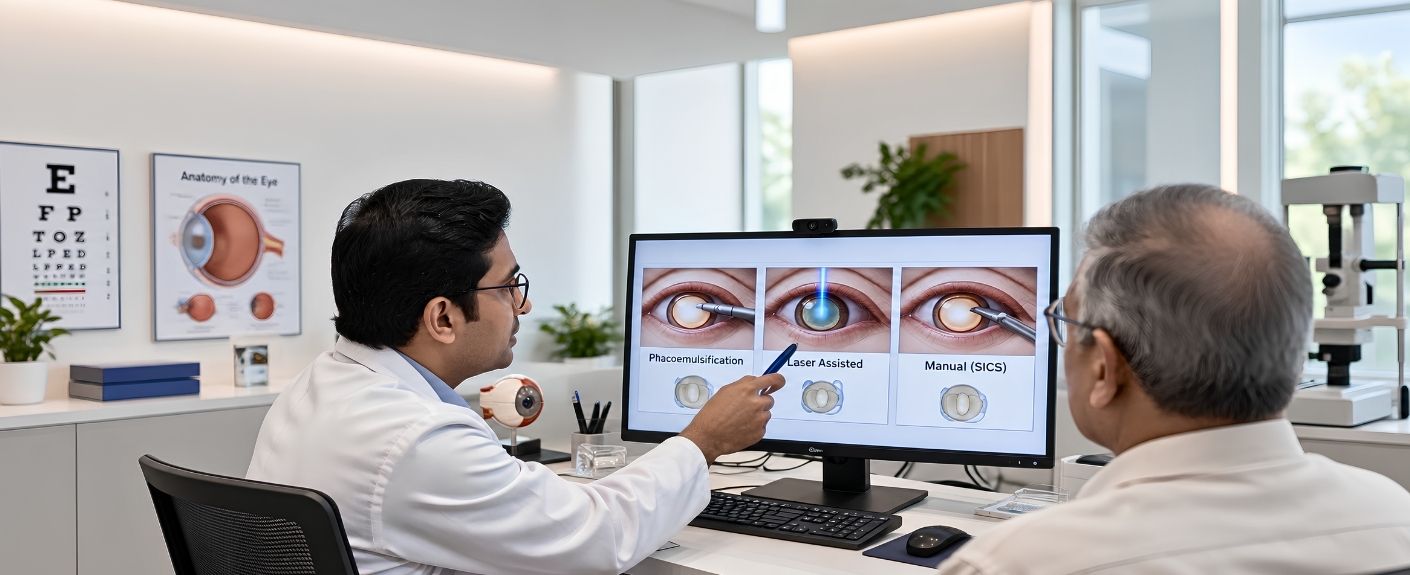

Cataract surgery is a surgery to remove a cloudy lens (cataract) in your eye and replace it with an artificial lens. This will help you to see more clearly. For most people, cataract surgery is a very successful procedure that can significantly improve your quality of life.
Continue reading to know more about the types of laser cataract surgery which will assist you in choosing the right one.
3 Types of Cataract Surgery
There are three major types of cataract surgery:
- Phacoemulsification
- Femtosecond laser-assisted cataract surgery (FLACS)
- Extracapsular cataract extraction (ECCE)
Phacoemulsification
Phacoemulsification is a type of cataract surgery used to remove the clouded lens of your eye.
How it works:
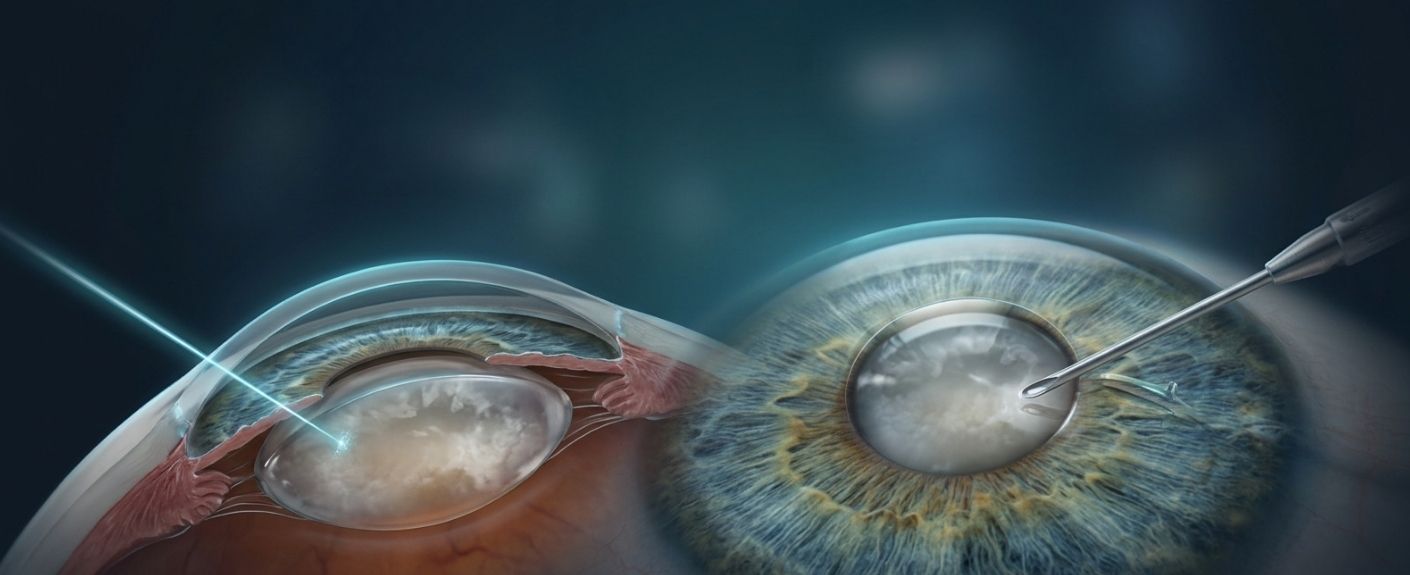
First, the ophthalmologist will expose the lens from its capsule (a thin membrane that surrounds the lens) with a small incision. They will then use high-frequency sound waves to break it up so that it turns into an emulsified mass, before flushing and vacuuming out the mass.
The machine that specialists use to perform phacoemulsification is called a phaco machine and its innovative technology ensures a high degree of accuracy. Because of this, it’s one of the most popular cataract surgeries in the world.
Once fully recovered, the surgery should restore your vision and you may need to update your glasses prescription.
This type of surgery is ideal for early and moderate cataracts.
Femtosecond laser-assisted cataract surgery (FLACS)
This advanced procedure uses laser technology to make precise incisions in order to break down the cataract, negating the use of traditional surgical tools such as scalpels and blades. The femtosecond laser offers high accuracy in making incisions at a point within the lens and cornea.
How it works:
As with more traditional cataract surgery, the procedure involves an incision in the cornea, before the laser makes another incision in the bag of the capsule (capsulotomy) surrounding the lens, offering access to the cataract. The laser replaces the needle that is used for this part of a traditional procedure, offering more precision.
Laser technology also replaces the ultrasonic device that is used in traditional procedures to fragment the cataract. Once the cataract has been broken down by the laser, it can be removed by the surgeon.
Ideal for those looking for high precision procedures and for those requiring reduction in astigmatism.
Extracapsular cataract surgery (Manual)
This cataract procedure is used for cases of highly advanced cataracts, when phacoemulsification will not work due to the high density of the cataract, or for various other reasons.
How it works:
Instead of fragmenting the cataract, extracapsular cataract surgery takes out the cataract in a single piece. The procedure removes the whole lens, leaving the capsule partially attached to make room for the implantation of the intraocular lens. Stitches may be needed for this procedure.
Extracapsular cataract surgery can be combined with phacoemulsification, with the lens being fragmented before being vacuumed out. This type of extracapsular cataract surgery may not require stitches.
This is ideal for mature or advanced cataracts.
What happens in cataract surgery
In every cataract surgery, the following steps will be followed:
Eye exam and assessment: The doctor will record your vision with and without spectacles and perform an assessment of your eye health.
1. Anesthesia: An anaesthetist will give you a local anaesthetic to ensure that you're comfortable during surgery. They will also offer you a light sedation, which will help to relax you during the procedure.
2. Surgical procedure:
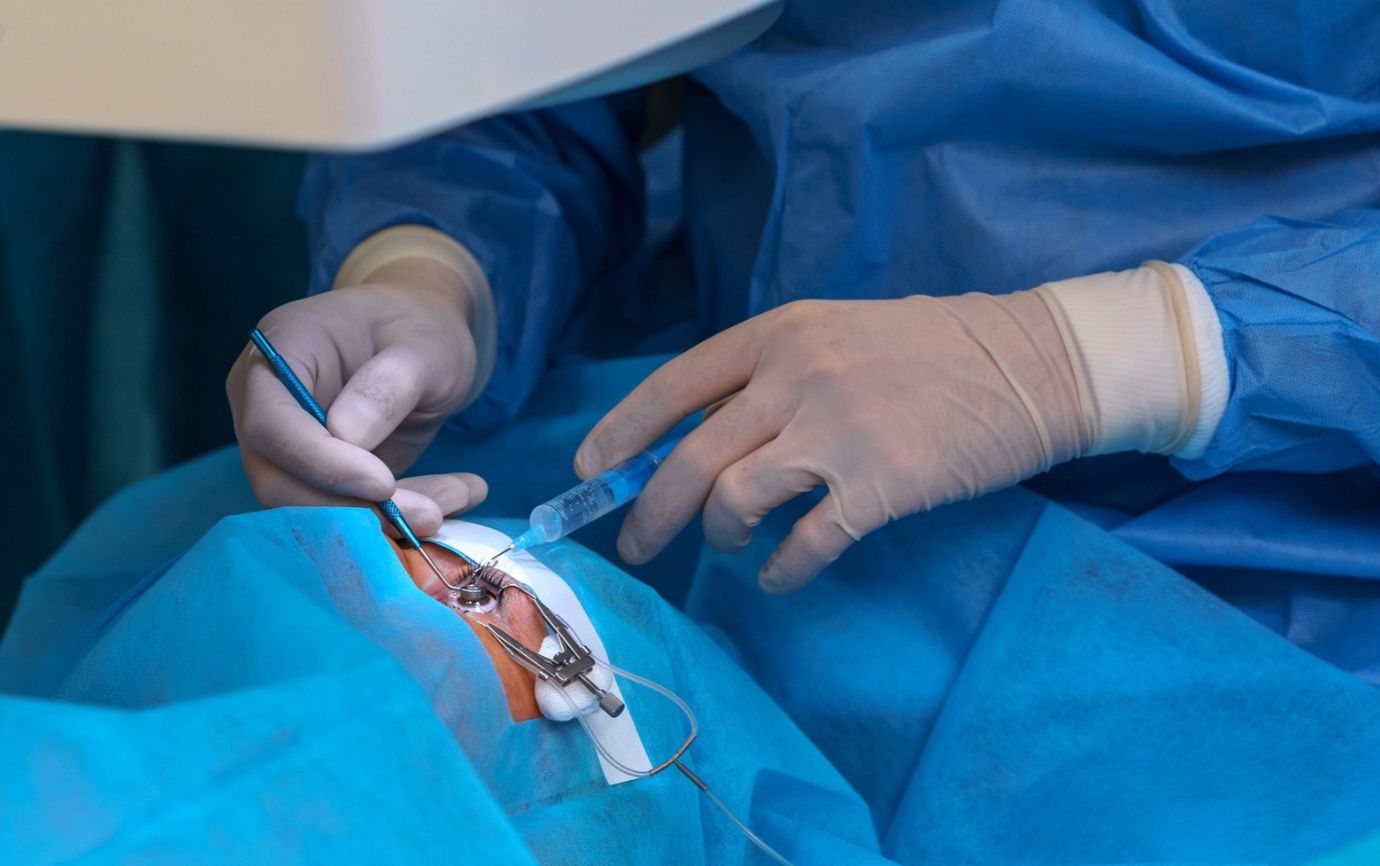
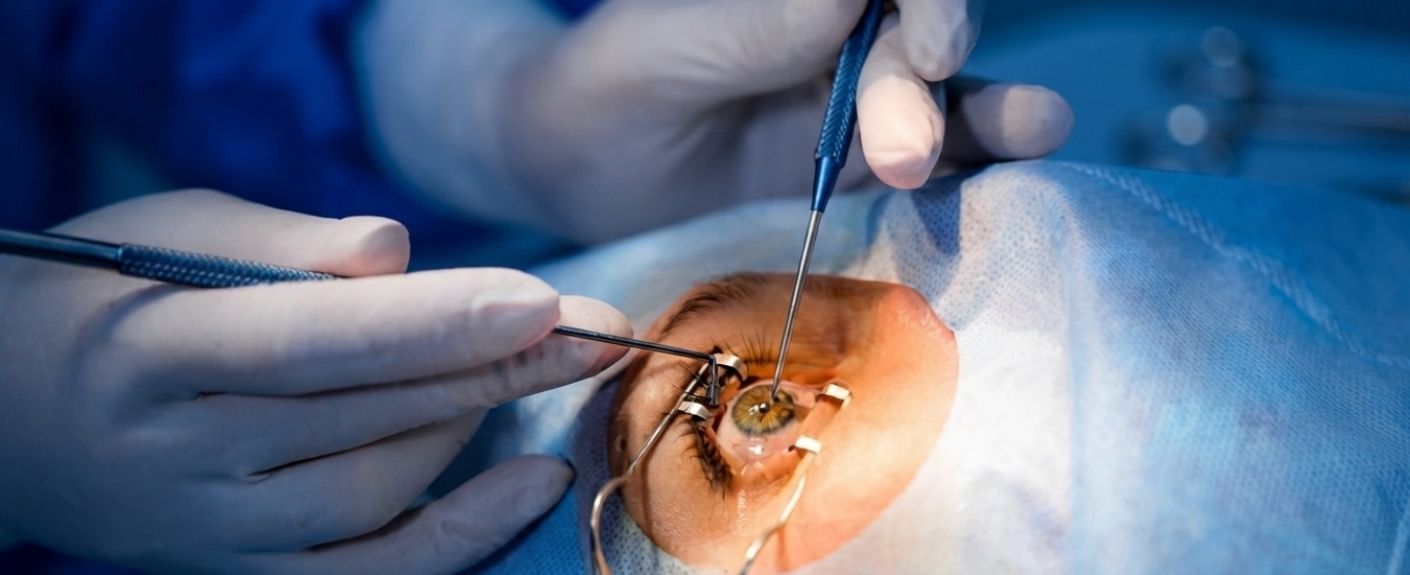
- Incision: Your surgeon will gently create a small opening on the surface of your eye to get access to your natural lens.
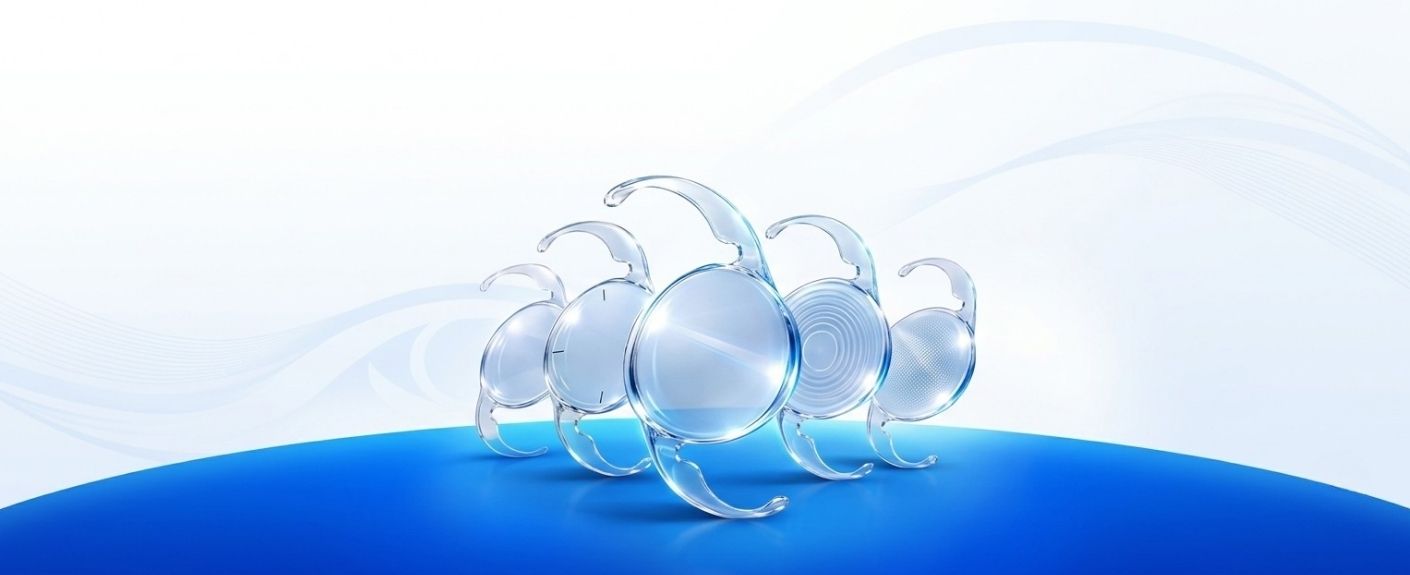
- Lens exchange: The contents of the natural lens bag are carefully removed before the synthetic lens is put in place. The main types of lens include the following.
- Monofocal lenses: Most people have these. They’re set at one level of vision, usually on things that are further away. This means you’ll probably need to wear reading glasses to focus on things that are closer up.
- Multifocal lenses: These allow you to see things that are both near and far away without glasses.
- Toric lenses: These are used to correct astigmatism and also reduce the need for you to wear glasses.
- Post-surgery: Your surgeon will apply eye drops and instructions on how to use them. They will cover your eye with a bandage, which will keep it clean and protected to help with the healing process.
How long does cataract surgery take
To better understand the cataract surgery time, let’s compare the different surgical vision correction procedures available.
- Phacoemulsification usually takes about 15–20 minutes. It is typically performed under local anesthesia and allows patients to go home the same day.
- Femtosecond laser-assisted cataract surgery generally takes 20 to 30 minutes for the actual procedure, though it may take slightly longer (up to 30-40 minutes) depending on the complexity.
- Extracapsular cataract surgery (Manual) typically lasts around 30 minutes, involves a larger incision, and recovery takes longer. Visual rehabilitation will take longer and sutures may need to be removed about one to two months after surgery.
Aftercare following cataract surgery
You can usually go home within an hour or so, as long as you’re feeling well enough. Your nurse will give you any medicines you need and advice about how to take care of your eye at home. The eye drops used to widen your pupil may cause blurry vision for a few hours after your operation. Ask someone to take you home because you won’t be able to drive yourself.
If you have a dressing, keep it in place overnight to protect your eye. You may be able to remove the dressing yourself the following day but check with your surgeon. The hospital may give you a plastic shield to wear at night, which will prevent you from accidentally rubbing your eyes. They’ll tell you how long you need to wear this for.
Your eye may feel a bit sore at first as the anaesthetic wears off. You can take over-the-counter painkillers to manage this. You’ll usually have antibiotic eye drops to help prevent an infection, and steroid eye drops to help control any swelling in your eye. Follow your surgeon's advice about how often to use your drops. It’s important to complete all the antibiotic medicines you’re prescribed. You’ll probably need to use them for at least a week.
Can cataract be treated without surgery?
If you have a cataract, surgery to replace your cloudy lens with a new one is the only way to restore your vision. But you may not need or want to have surgery straightaway.
If your vision is only slightly affected or not affected at all, your surgeon may recommend putting off cataract surgery for a while. They may suggest you have an eye examination once a year instead. This will monitor both how your cataract develops and any changes in your vision. Your vision will become increasingly cloudy and eventually you may decide to have cataract surgery
Vision after cataract surgery
Once your eye has healed, you’ll need to have an eye test. This will usually be with your optometrist, around four weeks after your operation. If you’ve had more complex surgery or developed complications, you may need to have several follow-up appointments at the hospital over the first days and weeks after surgery.
Cataract surgery usually works well and makes your vision less blurry. But you’re still likely to need glasses afterwards. The artificial lens that’s put in your eye will usually help you to see things further away more clearly. But you may need glasses to improve this even more. You’ll almost definitely need reading glasses too. If you have a multifocal lens, it can correct both your near and far vision, so that you won’t need to wear glasses.
Conclusion
Cataract is a surgery performed to remove a cloudy lens (cataract) in your eye and replace it with an artificial lens. There are three major types of cataract surgery which include Phacoemulsification, Femtosecond laser-assisted cataract surgery (FLACS) and Extracapsular cataract extraction (ECCE).
The right type of cataract surgery for you depends on the severity of the cataract and your vision requirements. Consult our expert ophthalmologists at Surya Eye Clinic to know the best option for you!
FAQs
Which type of cataract surgery is best: phaco, laser or manual?
There is no single best technique for everyone. The appropriate option depends on the type and severity of the cataract, eye health, astigmatism, surgical requirements, available technology and the ophthalmologist’s assessment.
What is the main difference between phaco and laser cataract surgery?
Phacoemulsification primarily uses ultrasound energy to break up the cloudy lens. Femtosecond laser-assisted cataract surgery uses a laser to perform certain key steps of the procedure before the cataract is removed and an IOL is implanted.
Is laser cataract surgery better than phacoemulsification?
Not necessarily. Both are established approaches to cataract surgery. Laser-assisted surgery can automate certain surgical steps with high precision, while phacoemulsification is widely used and effective. The better option depends on the individual patient.
When is manual cataract surgery preferred over phaco?
Manual extracapsular cataract extraction may be considered for very dense or advanced cataracts or in situations where phacoemulsification is not appropriate. The ophthalmologist determines the suitable technique after examining the cataract and overall eye condition.
Is laser cataract surgery completely bladeless?
Femtosecond laser-assisted cataract surgery uses a laser to perform several important steps that would otherwise be performed manually. However, the surgeon remains actively involved throughout the procedure, including removal of the cataract and implantation of the artificial lens.
How does my eye surgeon decide which cataract surgery is right for me?
The eye surgeon evaluates the cataract’s type and severity, overall eye health, corneal condition, astigmatism and other individual factors. These findings, along with your visual requirements, help determine the most appropriate surgical approach.
Get expert guidance on lens choices, surgery planning and the approach suited to your vision needs.