

The field of eye care has undergone a revolution thanks to a number of technological developments. The Pentacam test is one such modern diagnostic technique that offers comprehensive insights into the anatomy and condition of the cornea.
Additionally, it is crucial in the diagnosis of several eye disorders that impact the cornea and anterior portion of the eye.
Let's examine the Pentacam test's importance, uses, and role in the eye care sector in this article.
Understanding Pentacam Test
A state-of-the-art diagnostic instrument, the Pentacam test provides a thorough description of the shape, thickness, and curvature of the eye, particularly the cornea. It makes use of a Scheimpflug camera that spins around the eye and can capture roughly 50 scans in 2.0 seconds.
It is frequently used to get ready for refractive eye procedures, such as LASIK and EPI LASIK.
Ophthalmologists can plan treatment and identify any eye problems using this rapid, painless, and non-invasive technique.
It is employed in the diagnosis and treatment of several eye disorders, such as
- Corneal deformities
- Curvature of cornea
- Corneal dryness
- Fitting contact lens
- Corneal scars or opacities
- Corneal transplant
- Keratoconus
How Is Pentacam Test Done?
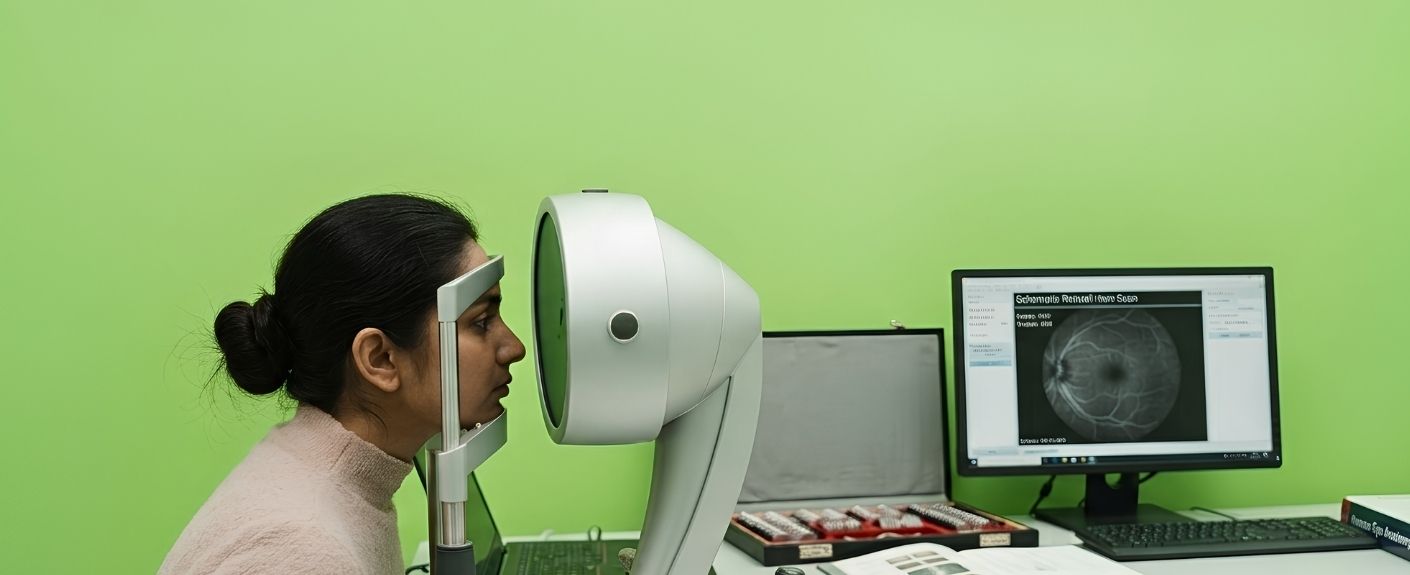
To get the best results, the Pentacam test is usually performed in a darkened environment.
In order to ensure stability throughout the test, the patient is recommended to rest their chin and forehead while comfortably seated in front of the Pentacam equipment. The process is repeated for the second eye after the first eye has been recorded.
Pentacam takes several pictures of the anterior part of the eye from different perspectives using a spinning Scheimpflug camera. It quickly produces a sequence of images.
Software analyses the data and creates a comprehensive 3D model. It offers accurate corneal mapping that will benefit the surgeon.
How Does Pentacam Test Work?
A tiny portion of the eye is illuminated by slit illumination in the Pentacam test. The cells in the eye disperse in the slit light as it passes, producing a sectional image that is subsequently captured by a camera inside view.
A 3D model of the complete anterior eye chamber is created by combining the several sectional photos that have been saved to a common reference point.
Benefits of Pentacam
The corneal thickness, curvature, and elevation maps are precisely measured using the Pentacam test. The Pentacam test's main benefits include
- Non-invasiveness: The Pentacam test doesn't require any injections or incisions and is entirely non-invasive. It guarantees that the test is safe for the majority of people and lowers the possibility of consequences.
- Quick and precise: Depending on the complexity of the necessary measurements, the Pentacam test can be finished in a few minutes.
- Early detection: The comprehensive information aids in the prompt treatment of corneal problems such as keratoconus, corneal scarring, and irregular corneal curvature.
- Comfort: The exam is not uncomfortable or irritating.
Uses Of Pentacam In Clinical Practice
- The Pentacam exam enables surgeons to plan treatments and aids in pre-operative evaluations for refractive surgery. It aids in determining the cornea's thickness, curvature, and general shape.
- It also aids in tracking the development of various eye disorders over time.
- Additionally, it supports superior intraocular lens alignment after cataract surgery.
- It might offer a thorough examination of the lens density and comprehend the anterior chamber's depth, volume, and angle.
Conclusions
The Pentacam test, which aids in the diagnosis and treatment of eye disorders, has completely changed the field of ophthalmology.
It can be useful in directing PRK and LASK refractive surgery. It is advised that you talk to your ophthalmologist about any worries you may have regarding the Pentacam before the test.
Please feel free to get in touch with Surya Eye Hospital if you have any questions concerning the Pentacam or would like more information about LASIK eye surgery in Mumbai.
A state-of-the-art eye hospital in Mumbai offers sophisticated diagnostics like Pentacam.
Frequently Asked Questions
How long does the Pentacam test take?
The Pentacam test typically takes five to ten minutes to finish. Depending on the patient's particular needs and the intricacy of the necessary measures, it might be more. No specific preparation is needed.
Does the Pentacam test have any negative effects?
No, there are no adverse effects and the Pentacam test is usually painless and safe. You can, however, seek further information from your ophthalmologist if you are worried about the test.
Can eye problems be detected early with the Pentacam test?
Indeed, the Pentacam test may be useful in identifying early indicators of diseases including keratoconus, glaucoma, and dry eye syndrome, especially those that impact the cornea and anterior portion of the eye. It aids in enhancing long-term results and averting additional issues.
Does the pentacam test hurt?
The pentacam test is painless and non-invasive. It doesn't entail touching the eye itself and usually takes a few minutes each eye.
References
- https://pmc.ncbi.nlm.nih.gov/articles/PMC6778463
- https://www.sciencedirect.com/science/article/abs/pii/S0002939421000325
Get clear, personalized guidance on your symptoms, diagnosis or recommended treatment.