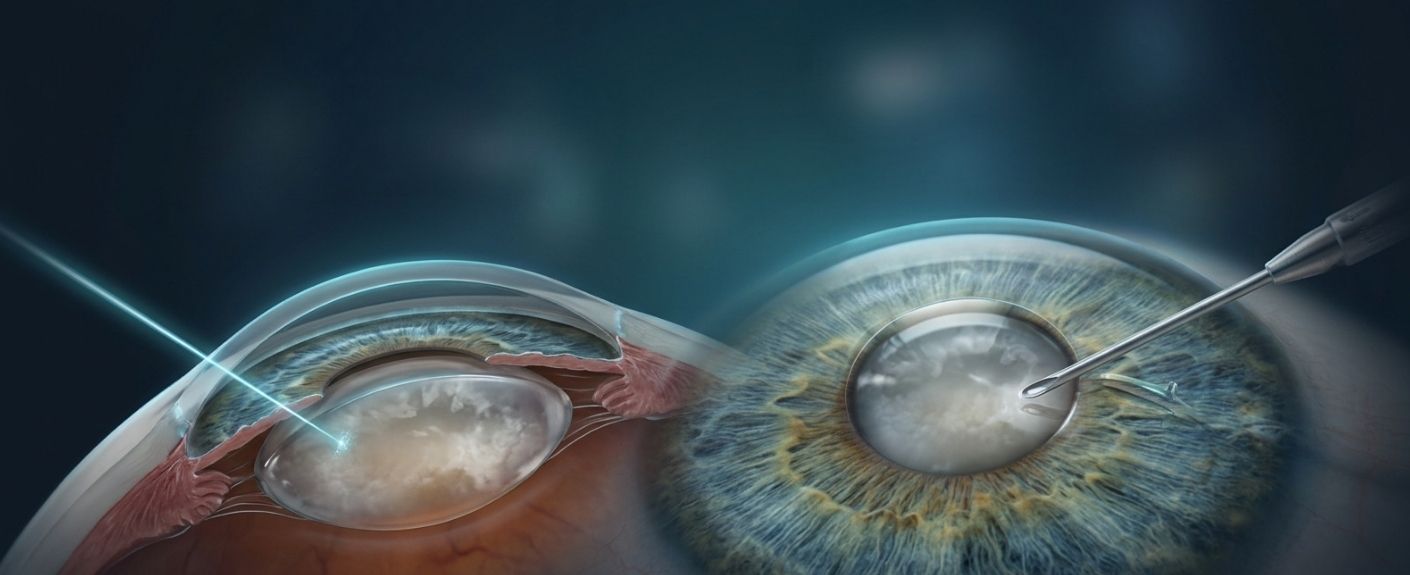


Cataracts cloud the eye's natural lens over time, and surgery removes that lens and puts an artificial one in its place. The procedure itself has become routine and safe. What actually shapes your day-to-day vision afterward is the lens you choose.
The two most common options are monofocal and multifocal lenses, each offering distinct advantages depending on your lifestyle, visual needs, and eye health.
The right intraocular lens should match your everyday lifestyle. Your work, hobbies, screen time, reading needs, and comfort with night driving can all affect which IOL option may be most suitable for you.
If you are considering cataract surgery in Mumbai, experienced specialists at Surya Eye Hospital can help you understand the differences between these lenses and recommend the most suitable option based on a detailed eye evaluation. This article explains how monofocal and multifocal lenses compare, their benefits, limitations, and the factors to consider before making a decision.
What is a Monofocal Lens?
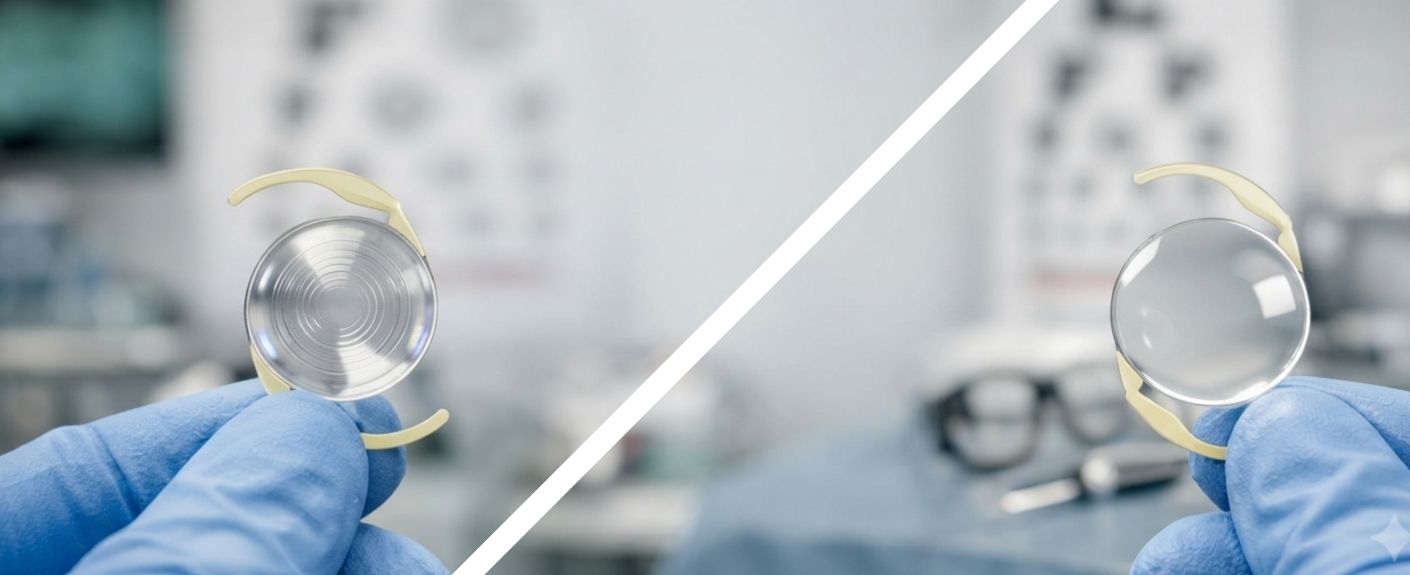
A monofocal lens is an intraocular lens designed to provide clear vision at one fixed distance. Most people choose distance vision, while near tasks such as reading usually require glasses after surgery.
Monofocal lenses have been used successfully in cataract surgery for decades and remain one of the most reliable choices. Unlike multifocal lenses, they have a single focusing point, allowing light to be directed to one distance only.
How do monofocal lenses work?
After removing the cataract, the surgeon implants the monofocal lens inside the eye. Before surgery, patients decide the focal point based on their daily activities.
Common choices include:
- Clear distance vision for driving and outdoor activities
- Intermediate vision for computer work
- Near vision for reading and close-up tasks
Many patients prefer correcting both eyes for distance vision and wearing reading glasses when needed.
Advantages of monofocal lenses
Monofocal lenses offer several well-established benefits:
- Excellent distance vision when set for distance correction
- Sharp image quality with good contrast sensitivity
- Lower risk of glare and halos than multifocal lenses
- Faster visual adaptation after surgery
- Suitable for patients with other eye conditions such as glaucoma, diabetic retinopathy, or macular degeneration in many cases
- More affordable than premium lens options
Limitations of monofocal lenses
Although monofocal lenses provide excellent clarity, they do not restore vision at all distances.
Patients may still need glasses for:
- Reading books
- Using smartphones
- Sewing or knitting
- Viewing small print
- Some computer work, depending on the selected focal distance
What is a Multifocal Lens?
A multifocal lens is an advanced intraocular lens that provides vision at multiple distances. It reduces dependence on glasses by allowing patients to see far, intermediate, and near objects more comfortably.
Unlike monofocal lenses, multifocal IOLs contain multiple optical zones that split incoming light into different focal points. This enables the brain to process images from various distances after an adaptation period.
How do multifocal lenses work?
Multifocal lenses use specialized optical designs that distribute light for different viewing distances.
These lenses help patients perform everyday activities such as:
- Reading newspapers
- Using digital devices
- Working on computers
- Watching television
- Driving during the day
- Performing household tasks
The brain gradually learns to select the sharpest image for the activity being performed.
Benefits of multifocal lenses
Many patients choose multifocal lenses because they provide greater visual independence.
Key benefits include:
- Clear vision at multiple distances
- Reduced dependence on spectacles
- Greater convenience for active lifestyles
- Improved ability to switch between different visual tasks
- Better overall quality of life for suitable candidates
Limitations of multifocal lenses
Multifocal lenses are not ideal for everyone.
Some patients may experience:
- Halos around lights at night
- Glare during nighttime driving
- Slightly reduced contrast sensitivity
- Longer neuroadaptation period as the brain adjusts
- Higher treatment cost compared with monofocal lenses
For many people, these visual disturbances decrease over several weeks or months after surgery.
Multifocal vs Monofocal Lens: Key Differences
Both monofocal and multifocal lenses effectively restore vision after cataract surgery, but they differ in how they focus light and support daily activities. The better option depends on your visual expectations, lifestyle, and overall eye health.
The following comparison highlights the main differences.
| Feature | Monofocal Lens | Multifocal Lens |
| Focus | One fixed distance | Multiple distances |
| Distance vision | Excellent | Excellent |
| Intermediate vision | May need glasses | Usually good |
| Near vision | Reading glasses usually required | Reduced dependence on reading glasses |
| Night vision | Better contrast and fewer halos | May experience glare or halos |
| Adaptation | Quick | May take several weeks |
| Cost | Lower | Higher |
| Suitable for | Patients prioritizing sharp distance vision | Patients seeking greater spectacle independence |
Although multifocal lenses provide greater convenience, monofocal lenses continue to offer outstanding visual quality and remain the preferred choice for many patients.
Which Lens Provides Better Vision After Cataract Surgery?
Neither monofocal nor multifocal lenses are universally better after cataract surgery. The right choice depends on your lifestyle, visual needs, eye health, and whether you want to reduce your dependence on glasses. While both lenses restore clear vision, they perform differently in specific situations.
1. Distance Vision
Both monofocal and multifocal lenses provide excellent distance vision when the correct lens power is selected. However, monofocal lenses are widely known for delivering exceptionally sharp vision at a single focal distance.
Monofocal lens:
- Provides excellent distance vision with high image clarity.
- Offers better contrast sensitivity, especially in low-light conditions.
- Suitable for patients who prioritize crisp distance vision.
Multifocal lens:
- Also provides excellent distance vision.
- Allows clear vision at other distances as well.
- Slightly lower contrast sensitivity compared to monofocal lenses.
2. Intermediate Vision
Intermediate vision is important for everyday activities such as working on a computer, cooking, shopping, or viewing a car dashboard.
Monofocal lens:
- May require glasses if the lens is set for distance vision.
- Provides clear intermediate vision only when specifically targeted for that distance.
Multifocal lens:
- Offers better intermediate vision without additional glasses.
- Makes switching between different daily activities more convenient.
3. Near Vision
Near vision is essential for reading books, newspapers, medication labels, menus, and using smartphones.
Monofocal lens:
- Reading glasses are usually required for close-up tasks.
- Suitable for patients who do not mind wearing spectacles for near vision.
Multifocal lens:
- Reduces dependence on reading glasses.
- Allows many patients to perform routine near tasks without spectacles.
- Some patients may still require glasses for prolonged reading or very fine print.
4. Night Vision
Night vision can influence your lens choice, particularly if you drive frequently after dark.
Monofocal lens:
- Better contrast sensitivity.
- Fewer halos and glare around headlights.
- Generally provides clearer vision in dim lighting.
Multifocal lens:
- May cause halos, glare, or starbursts around bright lights.
- These visual effects usually become less noticeable as the brain adapts.
- Some patients may continue to notice them during nighttime driving.
An experienced cataract surgeon in Mumbai at Surya Eye Hospital can explain the benefits and limitations of each lens option, helping you make the best decision, as per your needs.
Who is a Good Candidate for a Monofocal Lens?
A monofocal lens is an excellent choice for patients who prioritize sharp distance vision and do not mind wearing glasses for reading or other close-up activities. It also suits individuals with certain eye conditions that may limit the performance of multifocal lenses.
Your ophthalmologist may recommend a monofocal lens if you:
- Drive frequently, especially at night
- Prefer the best possible contrast sensitivity
- Have retinal diseases such as age-related macular degeneration or diabetic retinopathy
- Have glaucoma or corneal disorders
- Want a cost-effective cataract surgery option
- Are comfortable using reading glasses after surgery
Monofocal lenses also provide predictable visual outcomes and require minimal adaptation. Many patients achieve excellent distance vision and quickly adjust to their new lens.
Who Benefits Most from Multifocal Lenses?
Multifocal lenses are best suited for patients who want greater freedom from glasses after cataract surgery. They work particularly well for people with healthy eyes and realistic expectations about their visual outcomes.
You may be a good candidate if you:
- Have no significant retinal or optic nerve disease
- Want to reduce dependence on glasses
- Read frequently or use digital devices throughout the day
- Have an active lifestyle with varied visual demands
- Are willing to adapt to the optical design over several weeks
- Do not have severe dry eye or significant corneal irregularities
Although many patients enjoy excellent visual independence with multifocal lenses, some may continue to need glasses for very small print or prolonged reading.
Can You Upgrade to Premium Cataract Lenses?
Premium intraocular lenses offer additional visual benefits beyond those provided by standard monofocal lenses. Depending on your visual needs, your ophthalmologist may recommend multifocal, trifocal, extended depth of focus (EDOF), or toric premium lenses.
Premium lenses are designed to improve vision at multiple distances or correct refractive errors such as astigmatism. While they cost more than standard lenses, many patients choose them to reduce their dependence on spectacles.
If you are exploring premium cataract surgery in Mumbai, specialists at Surya Eye Hospital perform comprehensive preoperative assessments to determine whether a premium lens is suitable for your eyes and lifestyle.
Premium lenses may include:
- Multifocal IOLs: Improve distance, intermediate, and near vision.
- Trifocal IOLs: Provide better performance across three focal distances.
- Extended Depth of Focus (EDOF) IOLs: Offer a continuous range of vision with fewer visual disturbances than some multifocal designs.
- Toric IOLs: Correct corneal astigmatism while improving visual clarity.
Not every patient is an ideal candidate for premium lenses. A detailed examination helps identify the option most likely to deliver satisfactory long-term results.
Conclusion
There is no single intraocular lens that is best for everyone after cataract surgery. Monofocal lenses provide outstanding distance vision, excellent contrast sensitivity, and predictable outcomes, making them ideal for many patients.
Multifocal lenses, on the other hand, offer greater independence from glasses by improving vision at multiple distances, although they require careful patient selection and a period of visual adaptation.
The right choice depends on your eye health, lifestyle, occupation, and expectations after surgery. A thorough preoperative evaluation and discussion with an experienced ophthalmologist can help you select the lens that best matches your visual needs and supports long-term satisfaction.
Frequently Asked Questions
Which lens lasts longer, monofocal or multifocal?
Both monofocal and multifocal intraocular lenses are designed to last a lifetime. They are made from durable biocompatible materials that remain inside the eye permanently. Under normal circumstances, the implanted lens does not require replacement unless a rare complication develops.
Can multifocal lenses completely eliminate the need for glasses?
Multifocal lenses significantly reduce dependence on glasses for many daily activities, including reading and computer work. However, some patients may still require spectacles for prolonged reading, very fine print, or certain low-light situations depending on individual visual outcomes.
Are multifocal lenses safe?
Yes. Multifocal intraocular lenses are considered safe and are widely used worldwide. When implanted in carefully selected patients, they provide excellent visual outcomes. Your ophthalmologist will evaluate your eye health to determine whether you are an appropriate candidate before recommending this lens.
Why do some patients still choose monofocal lenses?
Many patients prefer monofocal lenses because they provide excellent image quality, better contrast sensitivity, fewer nighttime visual disturbances, and predictable results. They are also a suitable option for individuals with retinal diseases, glaucoma, or other eye conditions that may affect multifocal lens performance.
Can cataract lenses be replaced after surgery?
Intraocular lenses are intended to remain in the eye permanently. Although lens exchange is possible in selected situations, surgeons perform it only when medically necessary because it carries additional risks compared with the original cataract surgery.
Which lens is better for patients with diabetes?
The best lens depends on the health of the retina rather than diabetes alone. Patients with diabetic retinopathy or macular disease may achieve better visual quality with monofocal lenses. An ophthalmologist will evaluate the retina carefully before recommending the most appropriate intraocular lens.
Get expert guidance on lens choices, surgery planning and the approach suited to your vision needs.