

An eye prescription contains several numbers, and the cylindrical power, or CYL value, is one that commonly causes confusion. Cylindrical power is prescribed to correct astigmatism, a refractive error that can make objects appear blurred or distorted at different distances.
Astigmatism occurs when the cornea or lens does not bend light evenly in every direction. As a result, light may not focus at a single point on the retina. At Surya Eye Hospital in Mumbai, an eye examination can help determine whether blurred vision is related to astigmatism or another eye condition.
In this article, we explain cylindrical power, its relationship with astigmatism, CYL and axis values, and available correction options.
What is Cylindrical Power in the Eye?
Cylindrical power is the lens correction prescribed for astigmatism. It compensates for differences in how the eye bends light across different directions.
It is measured in dioptres (D) and appears as CYL on an eyeglass prescription. Unlike spherical power, which corrects myopia or hyperopia, cylindrical power provides direction-specific correction.
Having cylindrical power does not necessarily indicate an eye disease. Some people have cylindrical power alone, while others have both spherical and cylindrical values in the same prescription.
What is Astigmatism and How is it Related to Cylindrical Power?
Astigmatism is the refractive error, while cylindrical power is the optical correction used to manage it. It occurs when the curvature of the cornea or lens differs across different directions, causing incoming light to focus unevenly.
Astigmatism may be:
- Corneal astigmatism: Caused by differences in corneal curvature.
- Lenticular astigmatism: Related to differences in the curvature or refractive properties of the natural lens.
Astigmatism can occur on its own or together with myopia or hyperopia.
| Term | What It Means |
| Astigmatism | A refractive error that causes uneven focusing of light |
| Cylindrical power | Lens power prescribed to correct astigmatism |
| CYL | The prescription value showing the amount of cylindrical correction |
| Axis | The orientation at which cylindrical correction is required |
| SPH | Spherical correction for myopia or hyperopia |
How Does Cylindrical Power Affect Vision?
When astigmatism is not adequately corrected, vision may appear blurred or distorted because light does not focus evenly on the retina. Both near and distance vision can be affected.
Possible symptoms include:
- Blurred vision at near or far distances
- Distorted outlines or shapes
- Difficulty reading fine print
- Frequent squinting
- Eye strain or headaches
- Glare or reduced night-time clarity
Symptoms do not always correspond directly with the prescription number. Some people notice symptoms even with mild astigmatism, while others may experience fewer problems with a similar degree of refractive error.
What Do CYL and Axis Mean on an Eye Prescription?
CYL tells you how much correction is required for astigmatism, while the axis indicates the direction in which that correction must be positioned. Both measurements work together to provide accurate cylindrical correction.
Understanding these values can make an eye prescription much less mysterious.
What Does the CYL Number Mean?
The CYL value represents the strength of cylindrical correction required and is measured in dioptres. A larger absolute value generally indicates that a greater amount of astigmatism correction is needed.
For example, -2.00 D represents more cylindrical correction than -0.50 D.
CYL may be written with a plus (+) or minus (-) sign depending on the prescription convention used. The sign does not mean that the condition is better or worse.
What Does the Axis Mean?
The axis indicates the orientation of the cylindrical correction and is expressed between 1° and 180°. It identifies direction rather than the severity of astigmatism.
For example, an axis of 180° is not necessarily more severe than an axis of 90°. The number simply guides how the corrective lens should be oriented.
Example of an Eye Prescription
| SPH | CYL | Axis | What It May Indicate |
| -2.00 | -1.00 | 180° | Myopia with astigmatism |
| Plano | -0.75 | 90° | Astigmatism without significant spherical correction |
These examples are illustrative only. Eye prescriptions should be interpreted in the context of a complete eye examination.
Spherical Power vs Cylindrical Power
Spherical power corrects myopia or hyperopia, while cylindrical power corrects astigmatism. An individual prescription may contain spherical power, cylindrical power, or both.
The difference lies mainly in how the correction is applied.
| Feature | Spherical Power | Cylindrical Power |
| Corrects | Myopia or hyperopia | Astigmatism |
| Prescription abbreviation | SPH | CYL |
| Axis required | No | Yes |
| Type of correction | Uniform spherical correction | Direction-specific correction |
Someone with myopia and astigmatism, for example, may have both an SPH and CYL value on the same prescription.
What Causes Astigmatism?
Astigmatism is primarily caused by an irregular, oval-shaped curvature of the cornea or the lens inside the eye, rather than a normal, evenly rounded shape.
Possible factors include:
- Natural or inherited corneal shape
- Changes during eye growth
- Corneal injury or scarring
- Previous eye surgery
- Corneal disorders such as keratoconus
Prolonged screen use may cause dryness or eye strain, but it is not considered a direct cause of astigmatism.
How is Cylindrical Power Diagnosed?
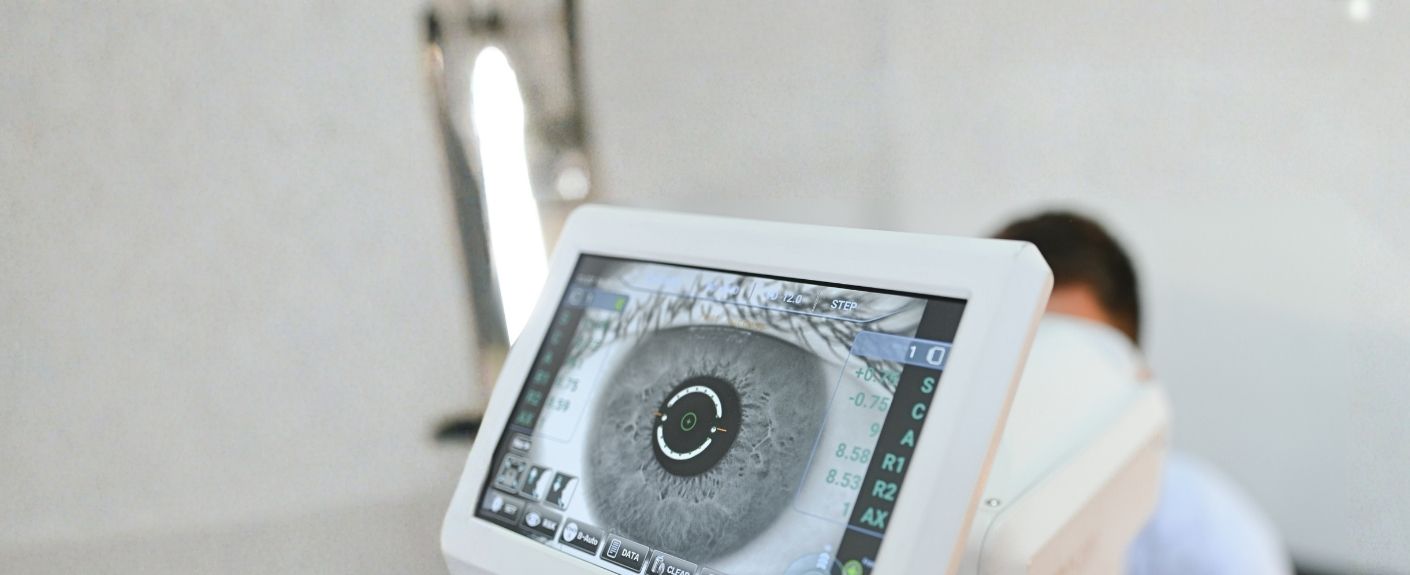
Cylindrical power is determined during an eye examination that measures refractive error and assesses how effectively the eye focuses light. Additional corneal testing may be advised when irregular astigmatism is suspected.
An eye check-up in Mumbai at Surya Eye Hospital may include:
- Visual acuity testing: Measures clarity of vision.
- Refraction or autorefraction: Determines the required spherical and cylindrical correction.
- Retinoscopy: Helps estimate refractive error.
- Keratometry: Measures corneal curvature.
- Corneal topography: Maps the corneal surface when detailed assessment is needed.
At Surya Eye Hospital, refractive and corneal evaluation can help determine the type and degree of astigmatism and whether further assessment is required.
Does Cylindrical Power Always Need Correction?
A small amount of cylindrical power may not require correction when vision remains clear and comfortable. The decision depends on symptoms, age, visual requirements, prescription strength, and examination findings.
An eye specialist may recommend correction when a person experiences:
- Persistent blurred or distorted vision
- Headaches related to visual effort
- Difficulty reading or working on screens
- Problems recognising distant details
- Difficulty driving, particularly at night
- Frequent squinting
- Visual difficulties affecting school performance in children
Children require particular attention because they may not recognise or report blurred vision themselves.
How is Cylindrical Power Corrected?
Cylindrical power can usually be corrected with glasses or appropriately fitted contact lenses. Refractive procedures may also be considered for suitable adults after an eye assessment.
Corrective Lenses
- Eyeglasses: Custom lenses with cylindrical power neutralize uneven light bending to restore sharp vision.
- Toric contact lenses: Unlike standard contacts, toric lenses feature different powers in specific meridians and stay aligned on your eye.
- Rigid gas-permeable (RGP) lenses: Hard contact lenses smooth out irregular corneal shapes for moderate to high astigmatism.
Surgical Options
- Refractive surgery: Procedures like LASIK, SMILE, or PRK permanently reshape the cornea with a laser if your prescription is stable.
- Implantable Collamer Lens (ICL): A specialized lens placed inside the eye for very high prescriptions or thin corneas.
- Toric IOLs: Artificial lenses implanted to replace the natural lens during cataract surgery.
Cylindrical Power in Children
Children can have astigmatism and cylindrical power from an early age, but they may not realise that their vision is blurred. Eye examinations can identify refractive errors that may affect visual development or learning.
Possible signs include:
- Frequent squinting
- Difficulty seeing the classroom board
- Sitting unusually close to books or screens
- Head tilting while viewing objects
- Headaches or tired eyes
- Avoiding reading or detailed visual tasks
The need for correction depends on age, degree of astigmatism, visual acuity, symptoms, and whether one or both eyes are affected.
When Should You See an Eye Specialist?
An eye examination is advisable when blurred or distorted vision persists, headaches repeatedly follow visual work, or eyesight appears to be changing. Children with suspected visual difficulty should also be assessed rather than waiting for them to report symptoms.
Consider consulting an eye specialist in Mumbai at Surya Eye Hospital for:
- Persistent blurred vision
- Frequent squinting
- Visual distortion
- Difficulty reading or driving
- Increasing cylindrical power
- Frequent changes in eyeglass prescription
- Reduced night-time clarity
- New or unexplained changes in vision
Sudden loss of vision, severe eye pain, flashes of light, or a sudden increase in floaters requires prompt medical assessment and should not be assumed to result from astigmatism.
Cylindrical Power and Astigmatism Care at Surya Eye Hospital
At Surya Eye Hospital, cylindrical power and astigmatism are assessed by considering refractive error, visual symptoms, corneal health, and individual visual needs.
As an eye hospital in Mumbai, Surya Eye provides refractive assessment, corneal evaluation, contact-lens services, and assessment for refractive procedures where clinically appropriate. Patients with changing or irregular cylindrical power may require additional corneal evaluation before the appropriate correction is recommended.
Frequently Asked Questions
Why do my new cylindrical glasses feel strange at first?
New cylindrical glasses can initially make floors, edges, or objects appear slightly tilted or distorted while the brain adjusts to the changed correction. This usually settles with consistent wear, but persistent discomfort should be reviewed by an eye specialist.
Will wearing glasses increase my cylindrical power?
No, wearing correctly prescribed glasses does not increase cylindrical power. Glasses simply correct the existing refractive error while they are worn. Changes in cylindrical power occur because of changes within the eye, not because someone regularly uses spectacles.
Can I wear contact lenses if I have cylindrical power?
Yes, many people with cylindrical power can wear toric contact lenses designed specifically for astigmatism. The appropriate lens depends on the prescription, corneal shape, tear-film health, comfort, and whether the lens remains properly positioned during blinking.
Can cylindrical power affect night driving?
Yes, uncorrected astigmatism can reduce visual clarity at night and may make headlights or streetlights appear blurred, streaked, or surrounded by glare. An updated prescription can help determine whether cylindrical correction is contributing to night-time visual difficulties.
Why is the cylindrical power different in both eyes?
It is common for the two eyes to have different cylindrical powers because their corneal or lens curvature does not have to be identical. Each eye is therefore measured separately, and the prescription is tailored to its individual refractive error.
Why has my axis changed even when my cylindrical power is similar?
The axis can change because it represents the orientation of astigmatism rather than its strength. A change does not automatically mean the condition has worsened, although significant prescription changes should be interpreted alongside vision testing and eye examination findings.
Get clear, personalized guidance on your symptoms, diagnosis or recommended treatment.